
AI That Speaks Compose: Inside Android's Revolutionary A2UI and AG-UI Generative UI Engine
Discover how the newly launched A2UI Jetpack Compose Renderer and the AG-UI transport protocol are killing the static app interface. Learn how Android apps can dynamically render native, secure, and brand-consistent UIs directly generated by AI agents on the fly.
Key takeaways
- • Discover how the newly launched A2UI Jetpack Compose Renderer and the AG-UI transport protocol are killing the static app interface
- • Learn how Android apps can dynamically render native, secure, and brand-consistent UIs directly generated by AI agents on the fly
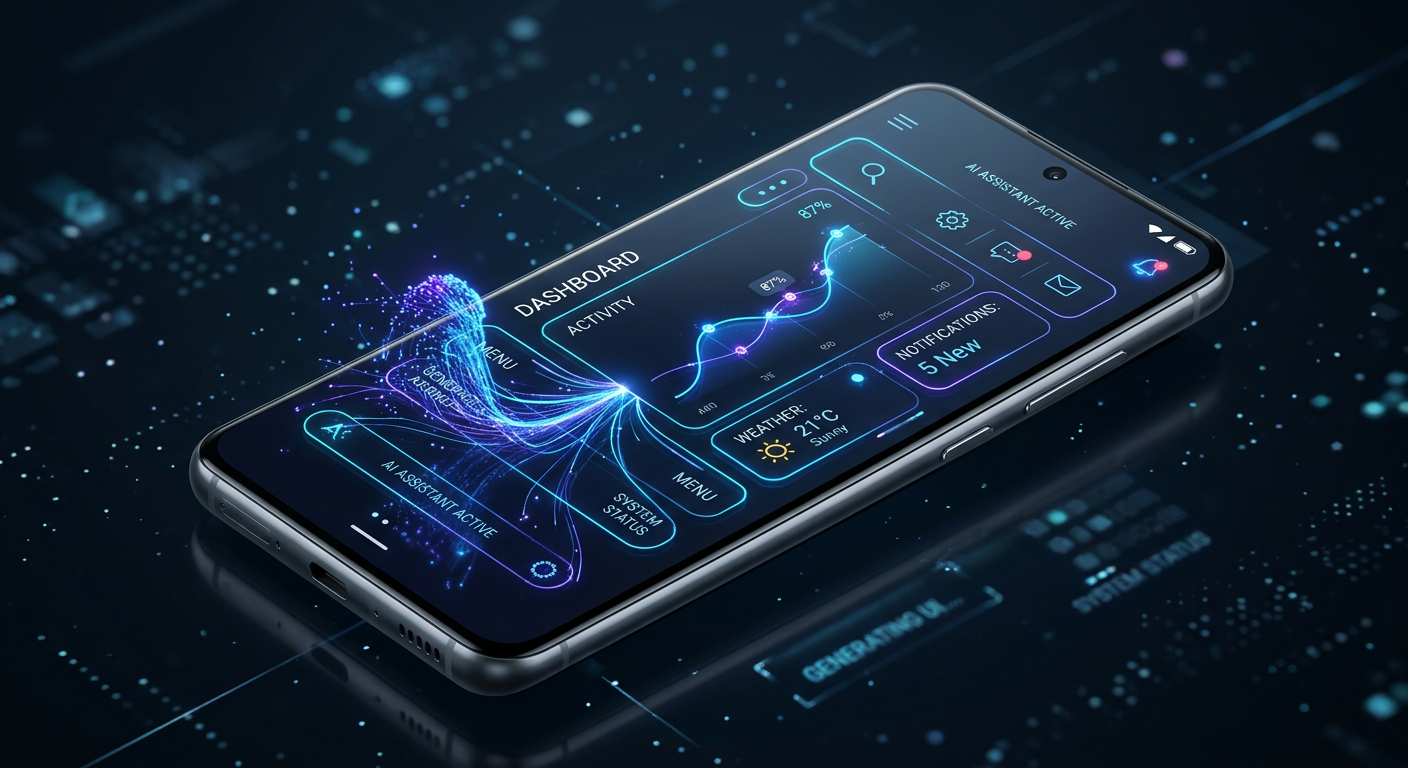
AI That Speaks Compose: Inside Android's Revolutionary A2UI and AG-UI Generative UI Engine
For the last two years, integrating AI into mobile apps meant one thing: embedding a chat bubble. Users would ask a question, watch a loading indicator, and read a block of Markdown text. But in mid-2026, Android is leading a paradigm shift away from rigid chat windows and toward Generative UI.
With the emergence of Google's A2UI (Agent-to-User Interface) Jetpack Compose Renderer and the AG-UI (Agent User Interface) protocol, AI agents are no longer just sending text—they are dynamically designing native Android interfaces on the fly.
The Technology: How A2UI and AG-UI Work
To understand this shift, it helps to separate the transport layer from the rendering layer.
- AG-UI is the transport protocol (often running over Server-Sent Events or WebSockets). It handles the real-time streaming of an AI agent's state, step-by-step reasoning, and payloads from the backend to the Android client.
- A2UI is the payload definition layer. Instead of returning arbitrary code, the agent outputs a highly structured, declarative JSON blueprint detailing exactly what components should be rendered.

When the Android app receives an A2UI payload, the A2UI Jetpack Compose Renderer parses the JSON. Rather than utilizing slow, insecure WebViews or iframes, it maps the JSON keys to a pre-approved, native Material 3 component catalog on the device. If the agent asks for a layout of three selection cards and a submit button, Compose renders those exact native widgets instantly with full access to local styles, accessibility features, and device-level hardware.
Why This Matters: Security and Consistency
Historically, server-driven UI came with significant risks. Executing remote JavaScript or HTML in-app is a security nightmare. A2UI solves this via a "data, not code" design philosophy:
- Zero Arbitrary Execution: The agent cannot execute remote code or inject scripts. It can only request widgets from a strictly bounded client-side catalog.
- Design System Harmony: Because the components are rendered natively, the generated UI instantly inherits the host app’s themes, typography, and dark-mode settings.
- Real-Time Collaborative Flows: If an AI travel agent is booking a flight, the user doesn't just watch a spinner. Via AG-UI, they see a real-time progress bar of agent steps (e.g., "Checking baggage options..."), instantly replaced by a custom seat-selection map designed specifically for that flight's layout.
While other APIs (like Android MCP) allow on-device agents to access app tools, A2UI and AG-UI allow remote and local agents to securely express themselves visually on the user's screen. With Jetpack Compose now officially Android's primary UI framework, this dynamic, agent-led future is already taking shape.
Tags
Grounded sources & citations
What to read next

Closing the XML Tab Forever: Inside Android's Official "Compose-First" Transition

From Chrome to Aluminium: Inside Google’s Secret Android Desktop Revolution

Android 17’s Silent Revolution: How "Pause Point" and "DeliQueue" Are Rewriting the Mobile Experience
Enjoyed this? Get the next one
Subscribe to the newsletter and the next playbook lands in your inbox — no spam, unsubscribe anytime.