Apple's Unprecedented Move: Mac and iPad Prices Spike Up to 25% Amid "RAMageddon"
In a sudden, mid-cycle shift, Apple has hiked the starting prices of its major iPad and Mac configurations globally due to rising memory costs. The price increase—spurred by AI data centers hogging global supply—has sent Apple's stock tumbling by almost 6%.

Apple's Unprecedented Move: Mac and iPad Prices Spike Up to 25% Amid "RAMageddon"
On Thursday, June 25, 2026, Apple did something it almost never does. In a sudden, mid-cycle update that caught the tech world completely off guard, the Cupertino giant updated its online store with steep price hikes across almost its entire Mac and iPad lineup. The company cited the skyrocketing cost of memory and storage components as the sole culprit, warning that it can no longer shield consumers from the soaring costs of DRAM and NAND flash memory.
The sudden price adjustments hit some of Apple’s most popular consumer hardware, sending the company’s stock tumbling by nearly 6% as investors reacted to the potential cooling of consumer demand.
The Toll of "RAMageddon": The New Price List
The price hikes are substantial, representing increases of up to 25%. Below are the most notable changes implemented immediately on Apple’s global storefronts:
- MacBook Neo (Base 256GB): Rose from $599 to $699 (a $100 increase).
- MacBook Air (512GB): Rose from $1,099 to $1,299 (a $200 increase).
- MacBook Pro (Base 14-inch 1TB): Rose from $1,699 to $1,999 (a $300 increase).
- iPad Air (128GB): Rose from $599 to $749 (a $150 / 25% increase).
- iPad Pro (WiFi 256GB): Rose from $999 to $1,199 (a $200 increase).
Even secondary devices felt the squeeze; the Apple TV jumped from $149 to $199, and the Apple Vision Pro saw a $200 bump to $3,699. Conspicuously spared is the iPhone, Apple’s primary cash cow, though analysts expect pricing pressure may catch up to the flagship line ahead of the iPhone 18 launch this autumn.
AI Servers Are Devouring Consumer Silicon
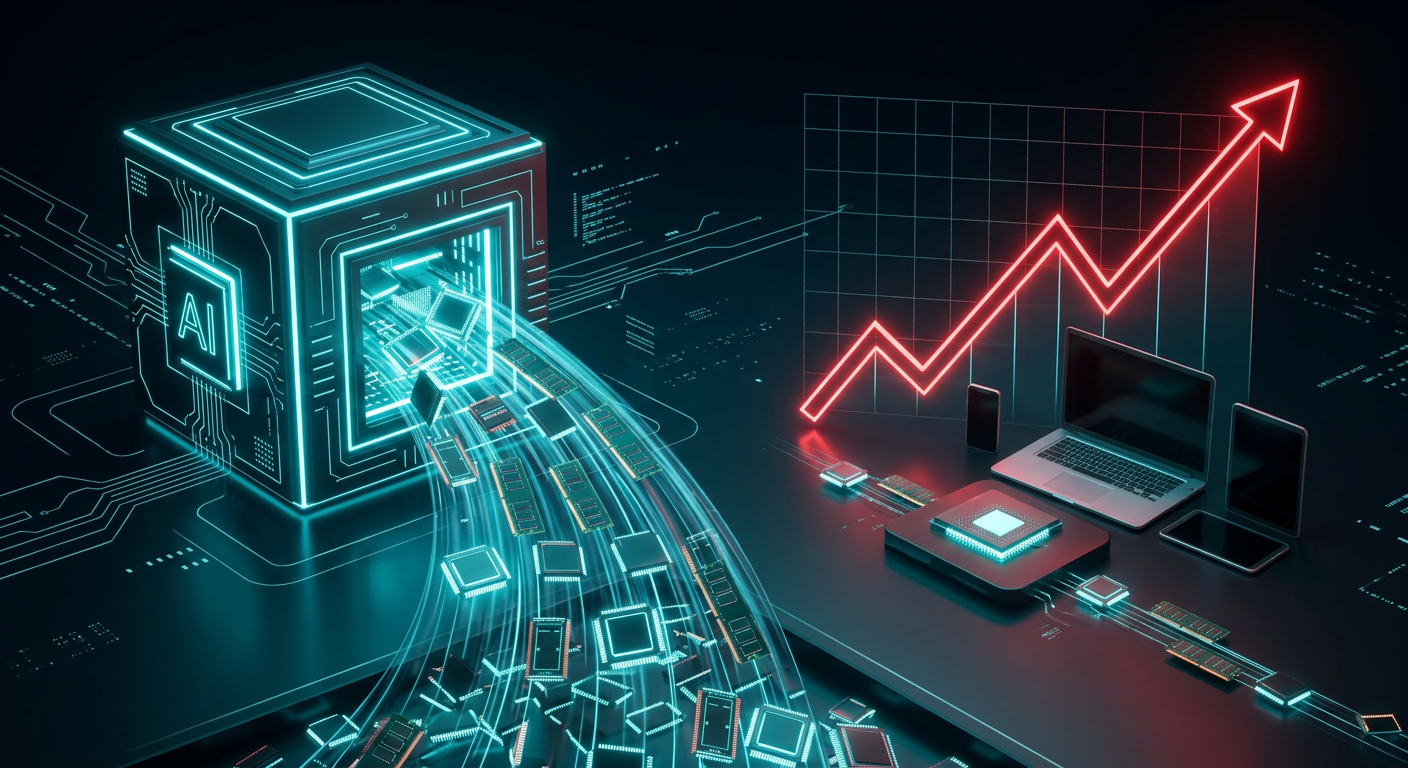
How did we get here? The crisis, which tech traders are calling "RAMageddon," is directly tied to the exponential buildout of artificial intelligence data centers. Enterprise AI chips and large language model training systems require vast, unprecedented amounts of high-performance memory.
Major memory producers like Micron, Samsung, and SK Hynix have redirected their manufacturing capacity to high-bandwidth server memory, leaving consumer electronics makers to fight over what remains. According to industry tracker TrendForce, contract prices for DRAM surged by nearly 98% in the first quarter of 2026 alone, with further double-digit hikes hitting this quarter.
Tim Cook’s "Hundred-Year Flood"
Outgoing Apple CEO Tim Cook—who will hand over the reins to John Ternus on September 1—was unusually blunt in addressing the situation. "This is a hundred-year flood," Cook remarked, noting that the component price surges are unlike anything the industry has seen in over 40 years.
With data centers projected to devour roughly 70% of global memory production by the end of the year, relief for consumers is far on the horizon. Industry insiders warn that memory supply is unlikely to loosen meaningfully until at least 2028, meaning these inflated Mac and iPad price tags are likely here to stay.


Get the wire in your inbox
Every new signal, straight from the generator. No noise, unsubscribe anytime.