
Base Azul and Succinct SP1: The End of the 7-Day Wait
Coinbase’s Base is upgrading to Base Azul, partnering with Succinct to integrate the SP1 zkVM. This shift transitions $7.4B in deposits from optimistic wait times to near-instant zero-knowledge multi-proof validation.
Key takeaways
- • Coinbase’s Base is upgrading to Base Azul, partnering with Succinct to integrate the SP1 zkVM
- • This shift transitions $7.4B in deposits from optimistic wait times to near-instant zero-knowledge multi-proof validation

Base Azul and Succinct SP1: The End of the 7-Day Wait
For years, Ethereum's Layer-2 scaling narrative has been split. Optimistic rollups won the battle for capital, but forced users into a painful compromise: the infamous seven-day withdrawal delay required to resolve potential fraud disputes. Meanwhile, Zero-Knowledge (ZK) solutions promised instant mathematical finality but remained historically slow, expensive, and notoriously complex to build.
That compromise has officially died. Coinbase's L2 network, Base, has announced its highly anticipated Base Azul upgrade. Partnering with cryptography pioneer Succinct, Base is integrating the SP1 zero-knowledge virtual machine (zkVM) to transition its colossal $7.4 billion in assets into a multi-proof validation layer.
How Base Azul Leverages SP1
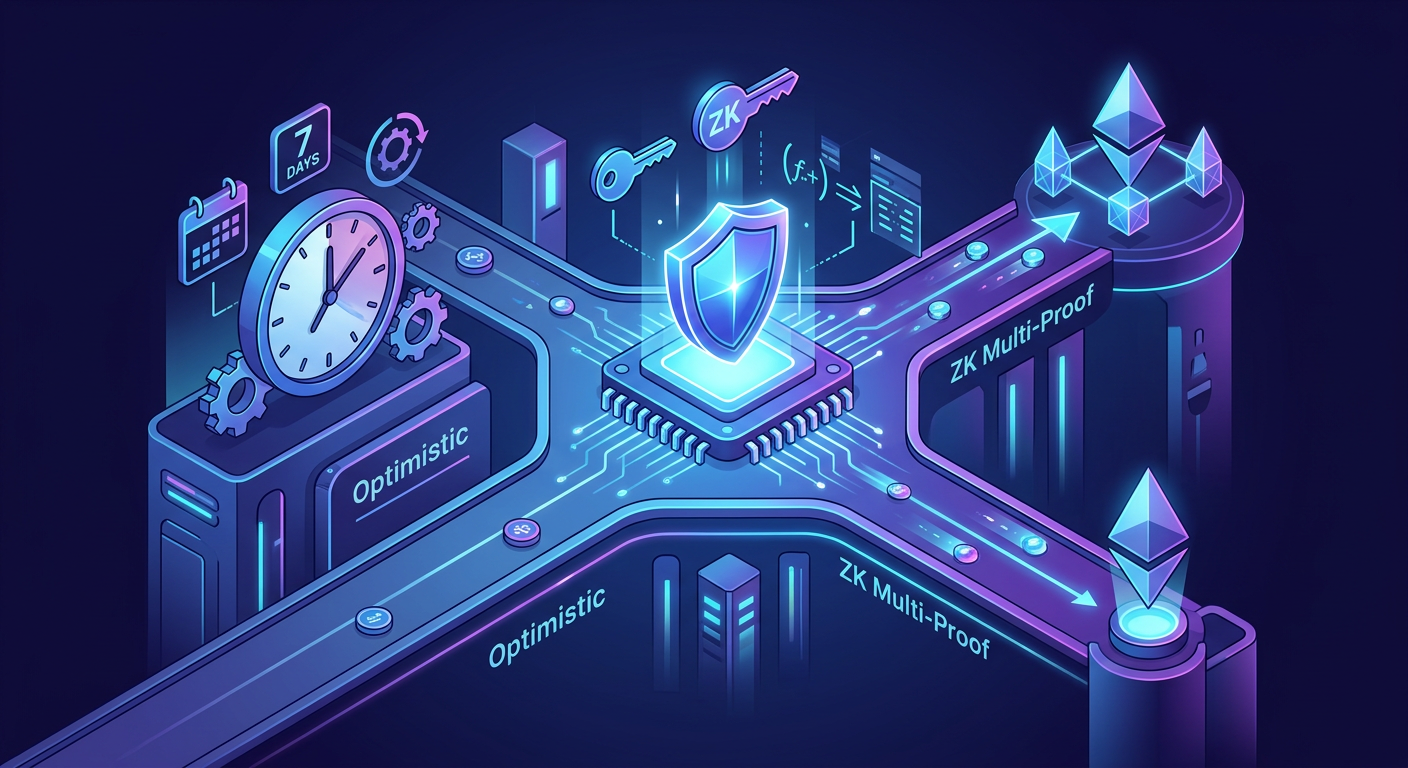
Instead of relying strictly on optimistic assumptions, Base Azul implements a robust multi-proof system that combines Trusted Execution Environments (TEEs) and ZK-validity proofs.
At the center of this transformation is Succinct's SP1. Previously, writing ZK-provable code meant crafting bespoke, highly specialized circuits. SP1 fundamentally shifts this paradigm:
- Rust-Native Execution: Developers write code in standard, out-of-the-box Rust.
- RISC-V Targeting: The Rust code compiles directly to a RISC-V instruction set.
- Instant Verifiability: SP1 generates efficient cryptographic execution proofs, reducing the time needed to verify billions in deposits from a week to less than a day.
Crossing the ZK Production Chasm
Base Azul is not an isolated event; it is the headline of a broader cryptographic revolution taking place in 2026. Zero-knowledge technology is rapidly crossing the "production chasm" from theoretical math into hyper-optimized consumer software:
- ZKsync's Airbender: Matter Labs recently unveiled Airbender, an open-source RISC-V zkVM that proves an entire Ethereum block in under 35 seconds on a single GPU. Operating at 21.8 MHz on a single H100, Airbender makes decentralized, home-based proving a reality.
- Microsoft's Vega: Out of academic labs, Microsoft Research introduced Vega, a system that generates ZK digital identity proofs from existing credentials in just 92 milliseconds directly on standard smartphones.
Why the Paradigm Shift Matters
The transition of Base toward a multi-proof structure signals that ZK tech is no longer a niche performance play—it is the default security standard for the multi-trillion-dollar digital economy. By eliminating the latency of the optimistic challenge period, Base Azul clears the biggest UX hurdle of Layer-2 blockchains, paving the way for seamless institutional settlement and instant interoperability across the Ethereum ecosystem.
Tags
Grounded sources & citations
What to read next

Silicon Sovereignty: Inside Cysic's Historic Open-Source FPGA zkVM Breakthrough

The ZK Soundness Crisis: Inside Trail of Bits’ Hack on Google's Quantum Proof

Beyond Passive Hardware: Inside peaqOS Stream and the ERC-3643 Machine Tokenization Revolution
Enjoyed this? Get the next one
Subscribe to the newsletter and the next playbook lands in your inbox — no spam, unsubscribe anytime.