Delayed by Its Own Game: How the Global AI RAM Crisis Squeezed Apple’s M5 Mac Studio
Apple has pushed the release of its highly anticipated M5 Mac Studio to October 2026 due to a severe global DRAM shortage. Ironically, the desktop beast designed to run massive AI models locally is being held back because cloud-based AI giants are buying up the global supply of memory chips.

Delayed by Its Own Game: How the Global AI RAM Crisis Squeezed Apple’s M5 Mac Studio
The ultimate irony of the modern hardware landscape has just played out in Cupertino. The upcoming M5-powered Mac Studio—widely anticipated to debut in the first half of 2026—has reportedly been pushed back to October 2026. The culprit behind the delay is not a design flaw or a manufacturing issue on Apple’s part. Instead, it is a brutal supply chain bottleneck: the global AI data center gold rush has devoured the world's memory chips.
The Memory Crisis Choking Desktop AI
As hyper-scalers like Nvidia, Microsoft, Amazon, Google, and Meta construct massive AI data centers at an unprecedented scale, they are aggressively competing for the same high-end DRAM and NAND flash memory components that power personal computers. This hardware crunch has forced Apple to react to a highly constrained supply chain.
The impact of this shortage is already visible. Current-generation Mac Studio models are facing massive shipping delays on Apple's online store, with certain high-tier memory configurations quietly being pulled from the site entirely. Apple simply cannot source enough RAM to build these professional-grade machines in volume.

Why the M5 Architecture is Worth the Wait
While the wait until October is frustrating, early architectural leaks of the M5 Max and M5 Ultra chips suggest that the performance leap will be monumental.
The M5 generation marks a fundamental shift in how Apple designs its silicon for machine learning. Traditionally, Apple Silicon relied on a separate, dedicated Neural Engine (NPU) block. In the M5 architecture, Apple is embedding dedicated neural accelerators directly inside every single GPU core.
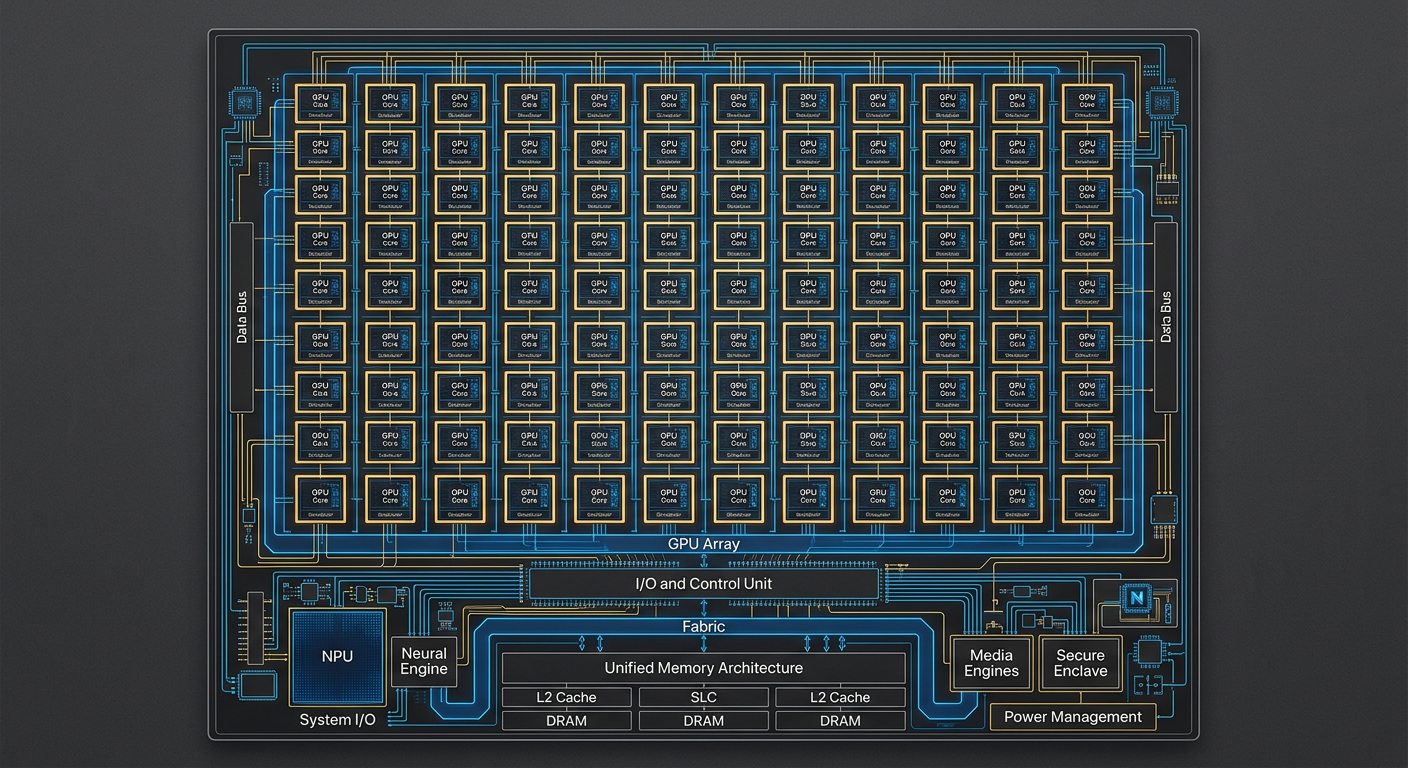
This structural redesign yields massive performance gains:
- 4x Faster Inference: Apple's machine learning research teams report a 4x improvement in time-to-first-token compared to the M4 architecture during local LLM execution.
- The Local LLM "Cheat Code": The top-tier M5 Ultra chip is rumored to support up to 192GB of unified memory with a blistering 800 GB/s bandwidth. For developers, this means the ability to load and run fully quantized 70-billion-parameter models natively on their desktop with room to spare.
Looking Toward October
With wholesale memory pricing continuing to rise, the entry-level M5 Max Mac Studio is expected to hold close to its traditional pricing, while the local AI monster—the M5 Ultra—may see a price hike, starting significantly higher at launch.
Ultimately, the delay of the M5 Mac Studio highlights a fascinating paradox. The very machine engineered to liberate developers from expensive cloud-computing fees and bring AI processing local is currently being held hostage by the insatiable hardware appetite of the cloud giants.


Get the wire in your inbox
Every new signal, straight from the generator. No noise, unsubscribe anytime.