
Ditching Proof of History: Inside Solana’s Radical "Alpenglow" Rebuild and the Quest for 150ms Finality
Solana is preparing for the most ambitious consensus overhaul in its history. The "Alpenglow" upgrade will replace foundational legacy components—Proof of History and TowerBFT—with Votor and Rotor, shrinking finality from 12.8 seconds to an instant 100–150 milliseconds.
Key takeaways
- • Solana is preparing for the most ambitious consensus overhaul in its history
- • The "Alpenglow" upgrade will replace foundational legacy components—Proof of History and TowerBFT—with Votor and Rotor, shrinking finality from 12.8 seconds to an instant 100–150 milliseconds

Ditching Proof of History: Inside Solana’s Radical "Alpenglow" Rebuild and the Quest for 150ms Finality
Solana is executing the most daring architectural pivot in its history. For years, the network has staked its technical identity on Proof of History (PoH)—the cryptographic clock that enables its high throughput. Yet, while users experience rapid "optimistic" confirmations, actual deterministic block finality has historically lingered around 12.8 seconds.
Now, with the Alpenglow upgrade (formalized in SIMD-0326), Solana is completely gutting its core consensus layer. By abandoning both Proof of History and TowerBFT, the blockchain is aiming for an unprecedented 100 to 150 milliseconds finality time—effectively moving L1 settlement into the realm of Web2 execution speeds.
Votor & Rotor: The New Engines of Consensus
Rather than layering votes across 32 rounds of on-chain activity, Alpenglow splits consensus responsibilities between two newly engineered protocols developed by Anza:
1. Votor: Off-Chain Voting and BLS Aggregation
Under the legacy setup, validators must submit on-chain transaction votes, consuming roughly 75% of Solana’s valuable block space. Votor moves this process entirely off-chain using lightweight UDP messages. It aggregates validator votes into a single, compact ~1,000-byte BLS signature certificate before anchoring it to the main chain.
Votor relies on a dual-path finality mechanism:
- The Fast Path: If a block receives approval from $\ge 80%$ of active validator stake, it achieves instant finality in ~100ms.
- The Slow Path: If network conditions degrade, a second round triggers when $\ge 60%$ of stake approves, ensuring safe finality in ~150ms.
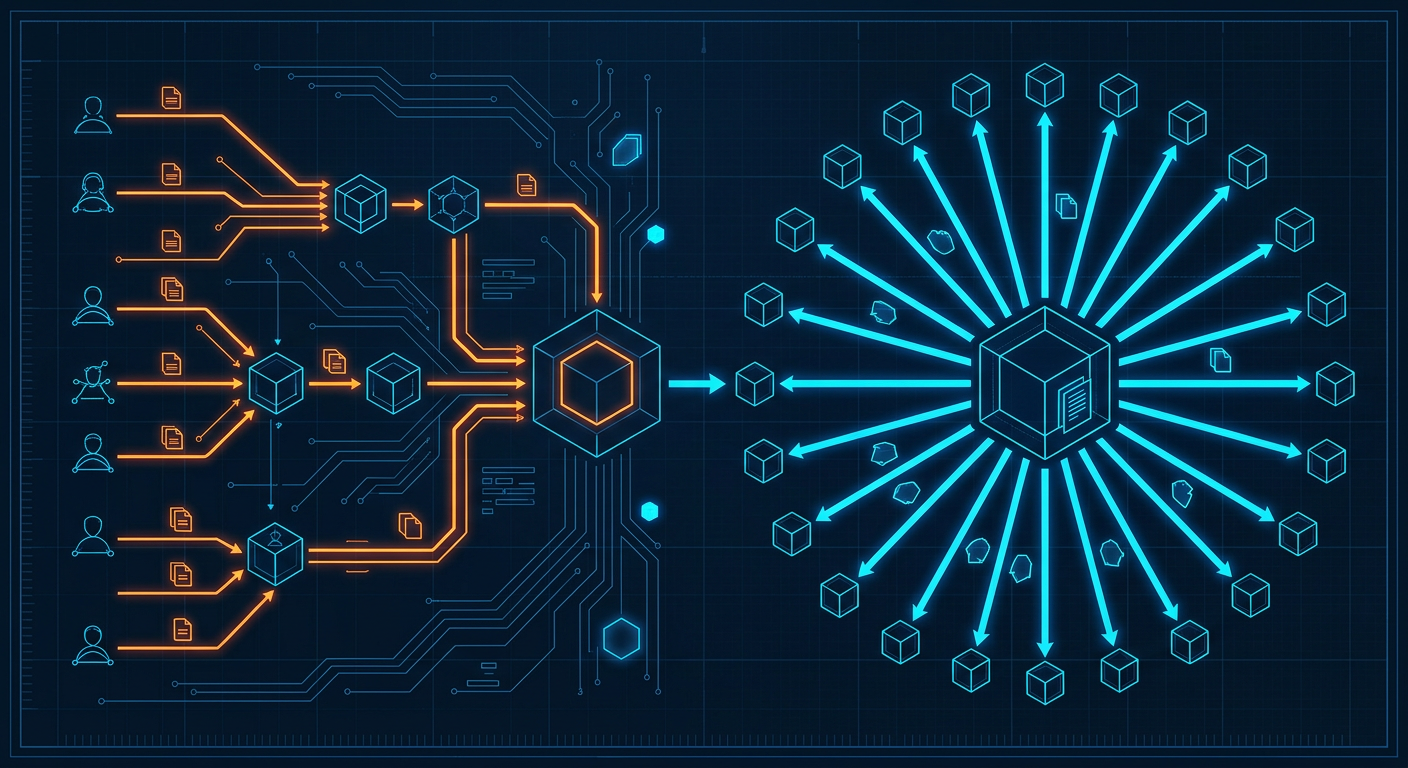
2. Rotor: Direct Block Propagation
Replacing the multi-hop "Turbine" propagation tree, Rotor introduces a direct broadcast architecture. By splitting blocks into slices and utilizing Reed-Solomon erasure coding, Rotor distributes blocks across the validator set in just a single network hop, dramatically reducing bandwidth requirements and reinforcing network resilience.
The Economics of Alpenglow: The Validator Admission Ticket (VAT)
This consensus shift also radically alters validator economics. Currently, validator operating costs are highly volatile due to transaction fees associated with submitting on-chain votes.
To offset this, SIMD-0357 introduces the Validator Admission Ticket (VAT). Validators will pay a flat fee of 1.6 SOL per epoch directly to the protocol to be included in the active consensus set. By removing the burden of on-chain voting, validator operational overhead is projected to plummet by up to 98.3%, lowering the minimum profitable staking threshold from ~4,850 SOL down to just ~450 SOL.
What Lies Ahead
During a fireside panel at Consensus Miami, Solana co-founder Anatoly Yakovenko confirmed that Alpenglow is slated for a Q3 2026 mainnet launch. With community validator testnet clusters running stable builds of the new consensus layer since May 11, 2026, the transition is already underway.
For dApp developers and traders, this upgrade promises to unlock an entirely new paradigm of high-frequency on-chain trading, instantaneous cross-border settlement, and decentralized applications that feel indistinguishable from centralized Web2 platforms.
Tags
Grounded sources & citations
What to read next

The Multilateral Ledger Era: How J.P. Morgan, Ripple, and Mastercard Bridged Public Blockchains to Wall Street Rails

Beyond the Physical Limit: How NEAR’s "SPICE" Upgrade Decouples Consensus to Achieve 200ms Blocks

Slicing the Treasury: Behind the Ethereum Foundation’s Radical Restructuring and New Five-Layer Architecture
Enjoyed this? Get the next one
Subscribe to the newsletter and the next playbook lands in your inbox — no spam, unsubscribe anytime.