
Rust’s Mid-2026 Triad: Debian’s APT Mandate, TIOBE #12, and the GPU Compilation Leap
Mid-2026 marks a watershed moment for the Rust programming language. With Debian mandating Rust for its core package manager, OpenAI joining as a Platinum Member, and Rust 1.97 radically modernizing GPU compilation, Rust has officially transitioned from a popular alternative to unavoidable industry infrastructure.
Key takeaways
- • Mid-2026 marks a watershed moment for the Rust programming language
- • With Debian mandating Rust for its core package manager, OpenAI joining as a Platinum Member, and Rust 1.97 radically modernizing GPU compilation, Rust has officially transitioned from a popular alternative to unavoidable industry infrastructure

Rust’s Mid-2026 Triad: Debian’s APT Mandate, TIOBE #12, and the GPU Compilation Leap
For years, the tech industry debated whether Rust was a trend or a permanent fixture of systems programming. By mid-2026, that debate has been permanently settled. In a series of consecutive, paradigm-shifting announcements, Rust has cemented itself not just as a preferred language for modern developers, but as an unavoidable pillar of global computing infrastructure.
From the absolute core of the Linux ecosystem to the cutting edge of AI-heavy GPU computing, Rust is redrawing the boundaries of software engineering. Here is a breakdown of the three massive breakthroughs defining Rust's landmark year.
1. The "Rust Edict": Debian APT Mandates Memory Safety
In what is being called one of the most significant architectural shifts in open-source history, long-time Debian developer and Advanced Package Tool (APT) maintainer Julian Andres Klode announced that APT is transitioning to a hard Rust dependency.
APT—the engine behind Debian, Ubuntu, Mint, and millions of servers worldwide—is slowly shedding its C++ legacy. Starting in mid-2026, the toolchain will mandate the Rust compiler, standard library, and the Rust-based Sequoia OpenPGP ecosystem. The integration targets highly vulnerable low-level tasks:
- Parsing package formats (
.deb,.ar, and.tarfiles). - HTTP signature verification to protect against man-in-the-middle exploits.
This transition hasn't come without controversy. Klode issued a direct ultimatum to maintainers of legacy CPU architectures (such as m68k, HPPA, and Alpha): ensure a working Rust toolchain within six months, or your ports will be phased out. It is a stark reminder that in 2026, memory safety is no longer optional—it is a requirement to exist.
2. To the Top 10: Rust Hits #12 on TIOBE
The momentum of these infrastructure shifts is directly reflected in developer adoption. In the June 2026 TIOBE Index, Rust soared to an all-time high of #12.
This historic rise prompted TIOBE CEO Paul Jansen to formally revise his previous predictions that Rust’s popularity would plateau. Jansen conceded that his earlier outlook was too cautious, noting that a top-10 breakthrough is now highly plausible. This is driven by economic reality: as organizations transition load-bearing systems to Rust, the demand—and compensation—for Rust developers continues to skyrocket.
To support this massive ecosystem growth, OpenAI officially joined the Rust Foundation as a Platinum Member. This move signals that the infrastructure powering the next generation of artificial intelligence is being fundamentally anchored on Rust.
3. Rust 1.97.0: Powering the GPU Revolution
As Rust takes over the CPU-bound systems world, it is simultaneously conquering the GPU. Scheduled for release on July 9, 2026, Rust 1.97.0 is raising the baseline for the nvptx64-nvidia-cuda compilation target.
The target output, which compiles Rust directly into PTX (Parallel Thread Execution) for NVIDIA GPUs, will now require a minimum of PTX ISA 7.0 (CUDA 11 drivers) and SM 7.0 (Volta architecture or newer).
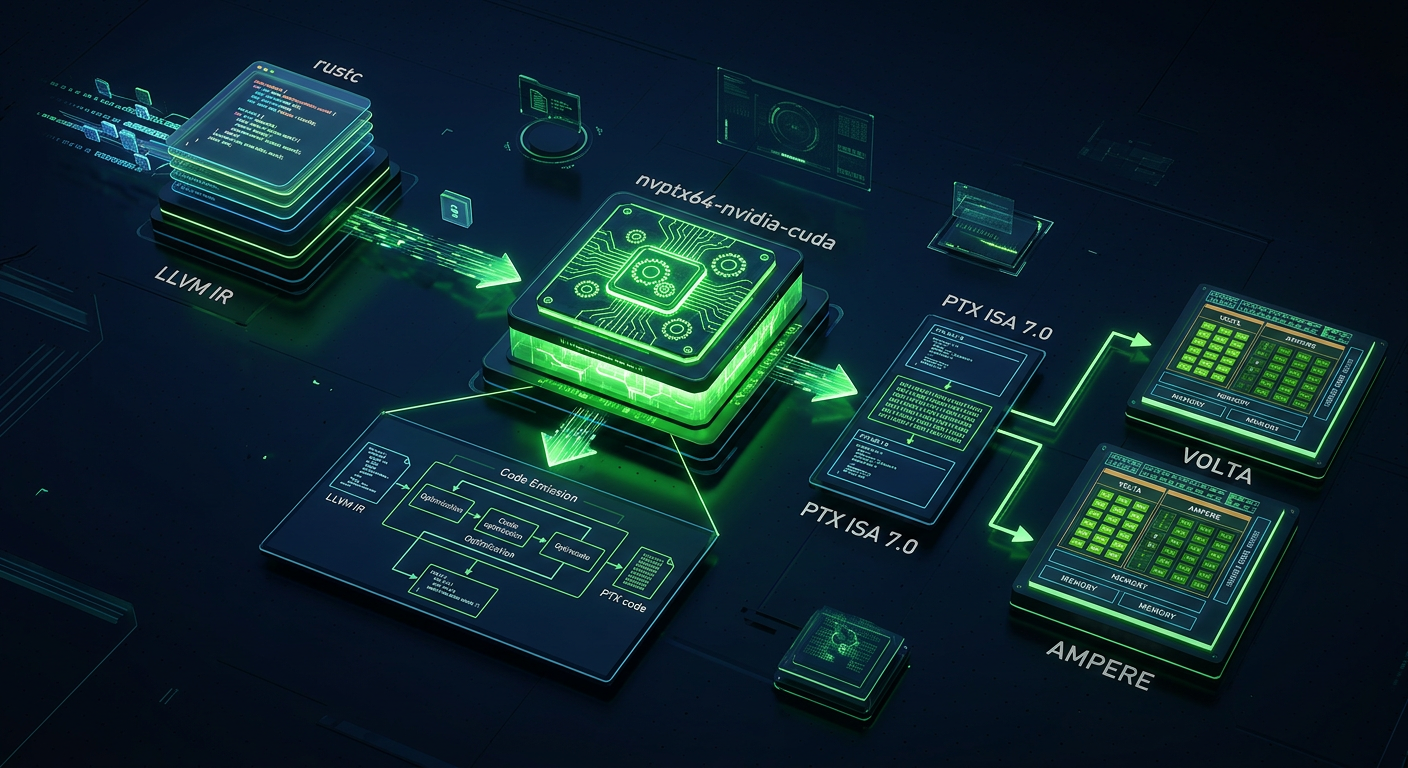
By dropping support for pre-2017 architectures (such as Maxwell and Pascal), the compiler team is resolving persistent compiler crashes and miscompilation bugs. This cleanup allows Rust to optimize heavily for modern GPU workloads, making it a formidable player in high-performance AI training and physical simulations. Additionally, Cargo devs will see quality-of-life updates, including the stabilization of the resolver.lockfile-path config field.
The Bottom Line
In 2026, Rust is no longer a language you choose just because you "like it". Between Debian's package manager overhaul, OpenAI's corporate backing, and GPU-level optimizations, Rust has officially graduated to the default language of secure, high-performance computing.
Tags
Grounded sources & citations
What to read next
The WebAssembly Divorce: Why Rust Finally Killed `--allow-undefined`
The Oxidation of Mesa: Inside Kraid, Collabora’s New Rust-Written Compiler for Arm Mali GPUs
crates.io Fortifies the Supply Chain: Inside Rust's 2026 Security Overhaul and the "Beyond the &" Roadmap
Enjoyed this? Get the next one
Subscribe to the newsletter and the next playbook lands in your inbox — no spam, unsubscribe anytime.