
The HTTP of the Agentic Web: Inside the A2A v1.0 Standard and the End of Python's Agent Monopoly
The Google-born and Linux Foundation-hosted Agent-to-Agent (A2A) protocol has officially hit its production-ready v1.0 milestone. Along with Microsoft's newly launched Agent Framework 1.0, this standard provides a universal, cross-language blueprint for multi-agent delegation without brittle, hand-coded integrations.
Key takeaways
- • The Google-born and Linux Foundation-hosted Agent-to-Agent (A2A) protocol has officially hit its production-ready v1.0 milestone
- • Along with Microsoft's newly launched Agent Framework 1.0, this standard provides a universal, cross-language blueprint for multi-agent delegation without brittle, hand-coded integrations
The HTTP of the Agentic Web: Inside the A2A v1.0 Standard and the End of Python's Agent Monopoly
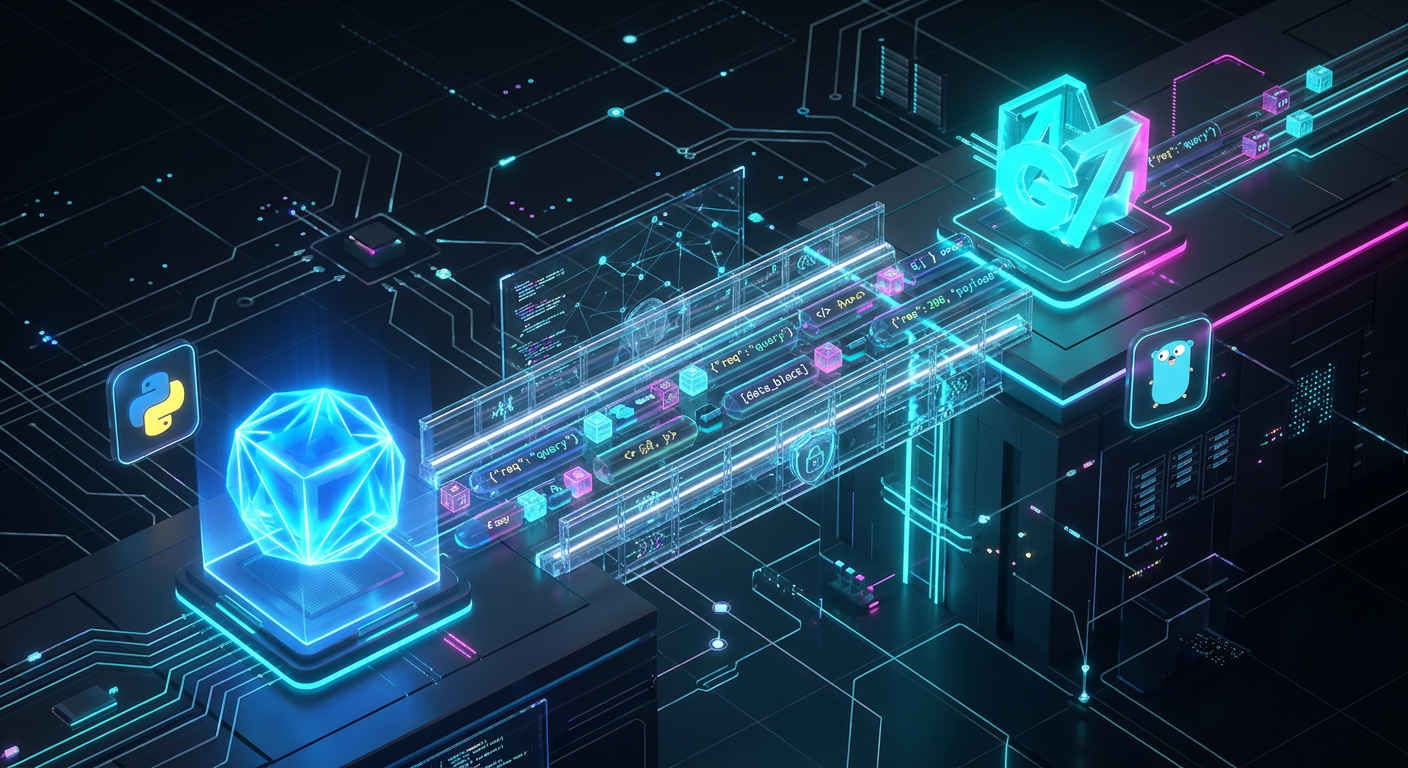
Until recently, building multi-agent AI pipelines felt like the Wild West. If a data science team built an extraction agent in Python and the security team built a policy validator in Go, getting them to collaborate required writing brittle, custom API wrappers. The industry has suffered from a fragmentation crisis, leaving teams locked into single-language silos and vendor-specific frameworks.
That fragmentation is officially over. The Agent-to-Agent (A2A) Protocol, originally developed by Google and hosted by the Linux Foundation, has officially reached its production-ready v1.0 milestone. Supported by over 150 organizations—including Microsoft, AWS, Salesforce, and IBM—A2A is rapidly becoming the "HTTP of the agentic web," establishing a universal standard for how autonomous systems discover, delegate, and communicate.
What is A2A and How Does It Work?
A2A defines a standard client-server architecture where agents can negotiate tasks across network, runtime, and organizational boundaries. It introduces the concept of the Agent Card, a JSON metadata file served at /.well-known/agent.json (analogous to an OpenAPI specification).
The Agent Card declares:
- Capabilities: What tasks the agent can perform.
- Transports: Support for JSON-RPC 2.0, gRPC, or HTTP/REST.
- Authentication: Strict verification requirements like OAuth 2.0 or mutual TLS (mTLS).
Once authorized, a client agent can dispatch a task, watch its state stream live via Server-Sent Events (SSE), and handle complex human-in-the-loop pauses—allowing a remote task to pause for human approval and resume seamlessly days later.
MCP vs. A2A: Knowing the Difference
A common source of confusion in the developer community is the division of labor between the Model Context Protocol (MCP) and A2A.
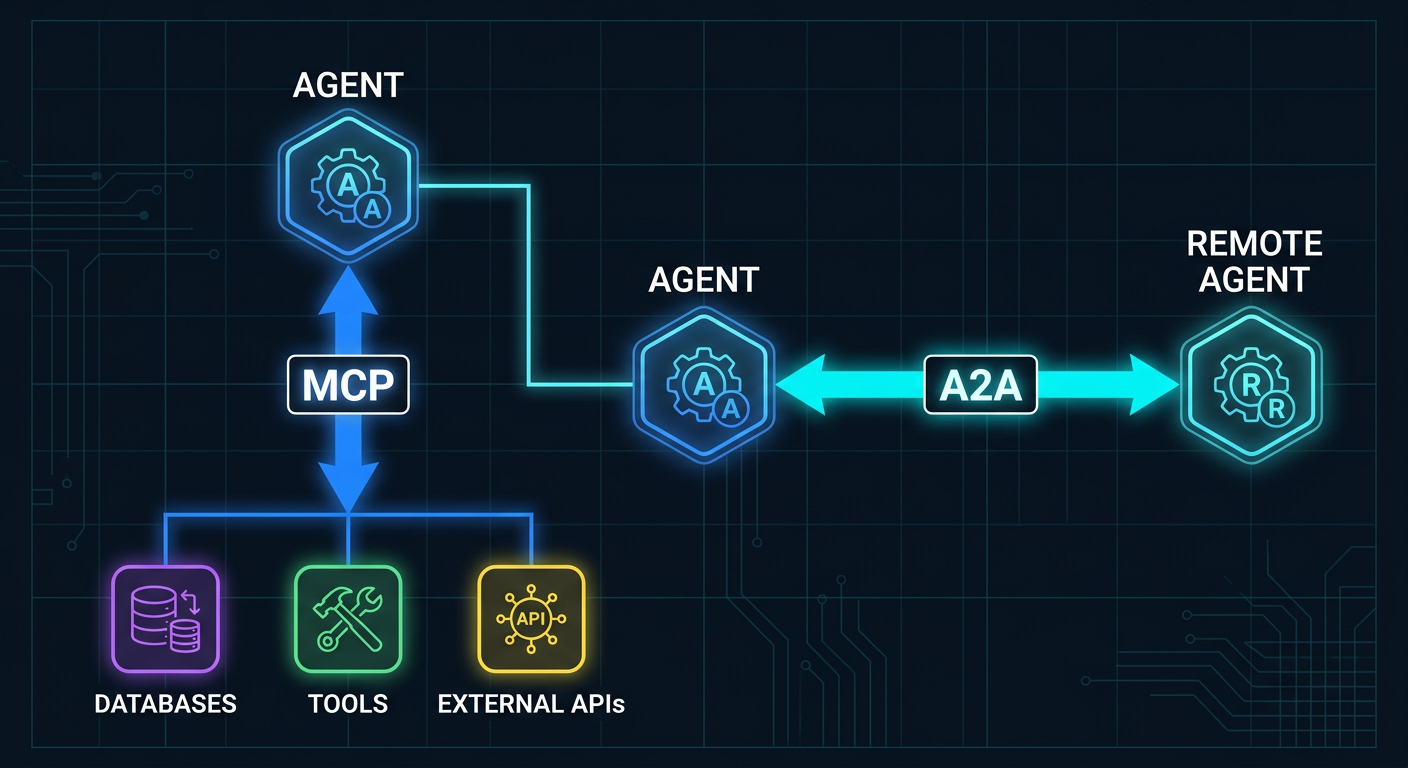
- MCP is internal and vertical: It connects an individual agent to its own tools, local databases, and filesystems.
- A2A is external and horizontal: It allows an agent to treat another agent as an independent actor, delegating tasks without sharing tool access, memory, or prompts.
The consensus production pattern is clear: use MCP vertically to equip your agent with tools, and A2A horizontally to coordinate work between those agents.
Heavyweights Fall in Line: Microsoft and Google ADK
The release of A2A 1.0 coincides with a massive consolidation of enterprise developer frameworks:
- Microsoft Agent Framework 1.0 GA: Launched as the open-source, production-ready successor to AutoGen and Semantic Kernel. It natively integrates A2A and MCP, supporting both Python and C# (.NET) out of the box.
- Google ADK 1.0: Shipped with multi-language SDKs (Python, TypeScript, Java, Go, and Kotlin), demonstrating the first cross-language, contract-compliance pipelines powered entirely by A2A.
By decoupling the agent runtime from the communication layer, A2A v1.0 ensures that your enterprise architecture is future-proof. You can now build, secure, and scale an interconnected mesh of specialized agents across your entire organization, regardless of the frameworks or models powering them.
Tags
Grounded sources & citations
What to read next
Vercel Launches Eve: The Filesystem-First Framework Redefining Production AI Agents

Beyond Hand-Coded Pipelines: Sakana AI’s Fugu Ultra Shifts Multi-Agent Orchestration into the Model Layer
Beyond `assert!(matches!(...))`: Inside Rust 1.96.0's Stabilized `assert_matches!` Revolution
Enjoyed this? Get the next one
Subscribe to the newsletter and the next playbook lands in your inbox — no spam, unsubscribe anytime.