
The Self-Auditing OS: Inside Ubuntu's Bold Rust-First Security and cargo-auditable Revolution
Canonical is transforming operating system security in Ubuntu 26.04 LTS and 26.10. By adopting cargo-auditable and integrating sudo-rs and ntpd-rs by default, Ubuntu is pioneering self-auditing binaries and a memory-safe userland.
Key takeaways
- • Canonical is transforming operating system security in Ubuntu 26.04 LTS and 26.10
- • By adopting cargo-auditable and integrating sudo-rs and ntpd-rs by default, Ubuntu is pioneering self-auditing binaries and a memory-safe userland
The Self-Auditing OS: Inside Ubuntu's Bold Rust-First Security and cargo-auditable Revolution
For decades, Linux distributions have operated under a silent compromise: when you install a pre-compiled binary, you take a leap of faith. Tracking down exactly which dependency versions are baked into that /usr/bin executable is an incredibly tedious, manual bookkeeping process. But in mid-2026, Canonical is putting an end to the "untraceable binary" era once and for all.
Following the landmark release of Ubuntu 26.04 LTS ("Resolute Raccoon") and active development on 26.10 ("Stonking Stingray"), Canonical is leveraging Rust to execute an unprecedented overhaul of operating system security, supply chain verification, and core userland architecture.
The Self-Auditing Binary: cargo-auditable Goes Mainstream
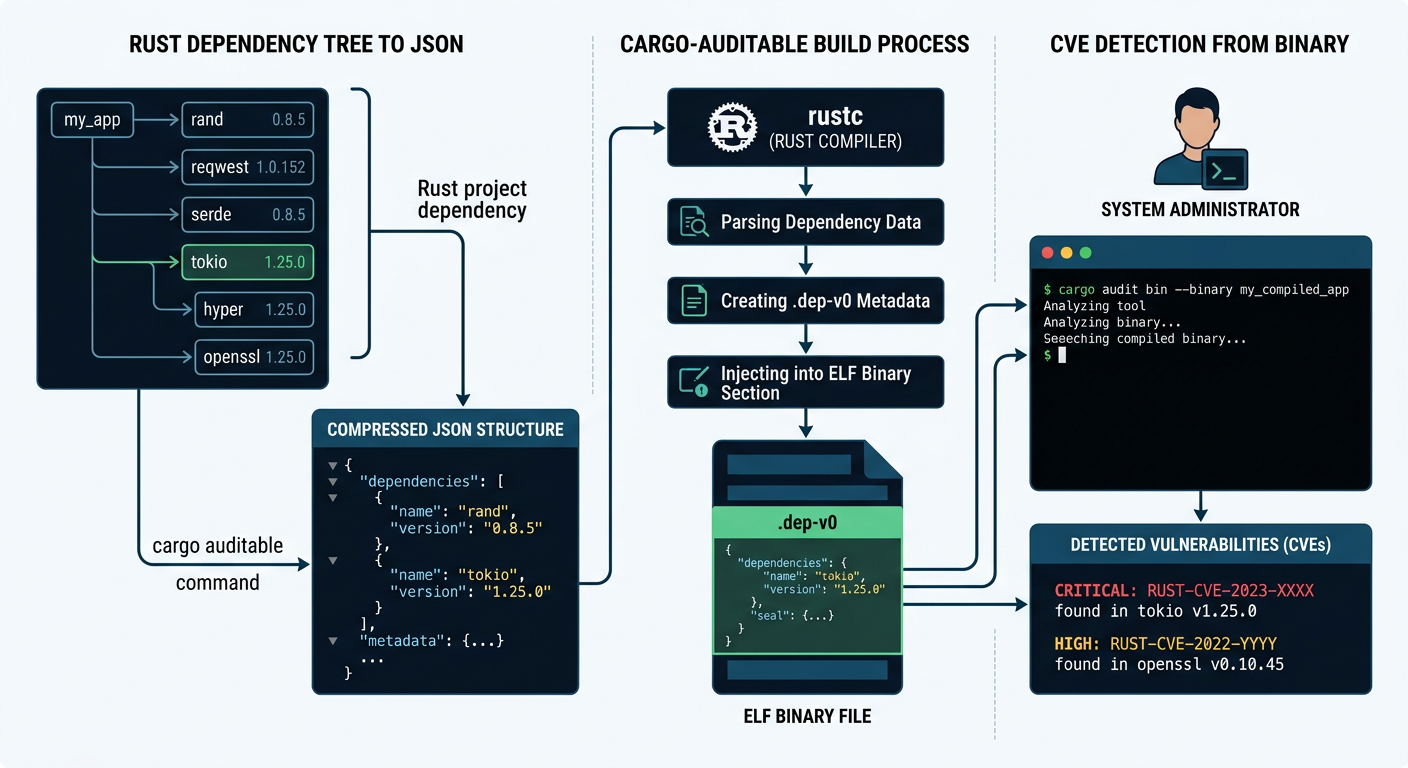
At the heart of this security revolution is a tool developed by the RustSec Working Group: cargo-auditable. Through Ubuntu’s package build system (dh-cargo), maintainers can now embed complete, zlib-compressed JSON dependency graphs directly into a custom ELF linker section (.dep-v0) of compiled Rust binaries.
Previously, if a critical vulnerability emerged in a deeply nested Rust crate, system administrators had to wait for upstream audits or manually scan source repositories just to see if their deployed binaries were affected. Now, security teams can run cargo-audit directly against a raw, production-compiled executable to extract its entire dependency tree and identify CVEs instantly. It brings absolute software bill-of-materials (SBOM) accountability with zero manual friction.
Oxidizing the Core: sudo-rs and ntpd-rs Take the Reins
The shift isn't just about auditing; it's about proactive, memory-safe defense. Ubuntu 26.04 LTS has crossed a historic rubicon by making sudo-rs (a memory-safe, Rust-written rewrite of the critical sudo utility) the default for system privilege escalation. By replacing decades-old, vulnerability-prone C code at the gate of root privileges, Canonical is systematically closing off entire classes of legacy exploits.
Furthermore, Ubuntu has adopted ntpd-rs as its default time synchronization client and server. Written entirely in Rust, ntpd-rs ensures that critical network timing synchronization remains immune to buffer overflows and memory corruption, which have historically plagued older, C-based NTP daemons.
Looking Ahead: Rust 1.97 and Stonking Stingray
The momentum is only growing. Canonical, which recently joined the Rust Foundation as a Gold member, is targeting Rust 1.97 as the default toolchain for Ubuntu 26.10 "Stonking Stingray" ahead of its upcoming feature freeze.
Combined with "chiseled" Rust OCI containers—which provide ultra-secure, minimal distroless deployment environments—Ubuntu is positioning itself as the premier platform for enterprise Rust production. This isn't just a routine software upgrade cycle. It is a fundamental philosophical shift: moving from reactive patching to a proactive, compiler-enforced paradigm where the operating system itself is hardened at the code level.
Tags
Grounded sources & citations
What to read next
The 1.0 Maturity Era: How Zed and Iroh Are Redefining Rust-Native Infrastructure
The WebAssembly Divorce: Why Rust Finally Killed `--allow-undefined`

The Oxidation of Mesa: Inside Kraid, Collabora’s New Rust-Written Compiler for Arm Mali GPUs
Enjoyed this? Get the next one
Subscribe to the newsletter and the next playbook lands in your inbox — no spam, unsubscribe anytime.