Beyond the Physical Limit: How NEAR’s "SPICE" Upgrade Decouples Consensus to Achieve 200ms Blocks
NEAR Protocol has officially previewed "SPICE," an upcoming major upgrade that decouples consensus from transaction execution. This structural shift will slash block times from 600ms to 200ms, paving the way for sub-second finality and the rapid rise of on-chain autonomous AI agents.

Beyond the Physical Limit: How NEAR’s "SPICE" Upgrade Decouples Consensus to Achieve 200ms Blocks
While the broader Web3 landscape remains locked in a battle over minor throughput tweaks and fee structures, NEAR Protocol is executing a fundamental architectural redesign. On June 22, 2026, Near One’s Chief Technology Officer Anton Astafiev officially previewed SPICE (Separation of Consensus and Execution). Marking NEAR's most significant protocol upgrade since 2024’s stateless validation, SPICE is set to slash block times to an astonishing 200 milliseconds—pushing blockchain latency to the absolute limits of physical possibility.
What is SPICE?
In traditional blockchain networks, including NEAR’s current iteration, block consensus and execution are strictly coupled. Validators must agree on the order of transactions and completely process them to calculate the new state of the ledger before they can finalize a block. This sequential processing creates a severe performance bottleneck.
SPICE entirely dismantles this dependency. By decoupling the consensus layer from the execution layer, validators can reach agreement on a list of transactions and validate signatures almost instantaneously—completing a block before the heavy lifting of state computation even begins.
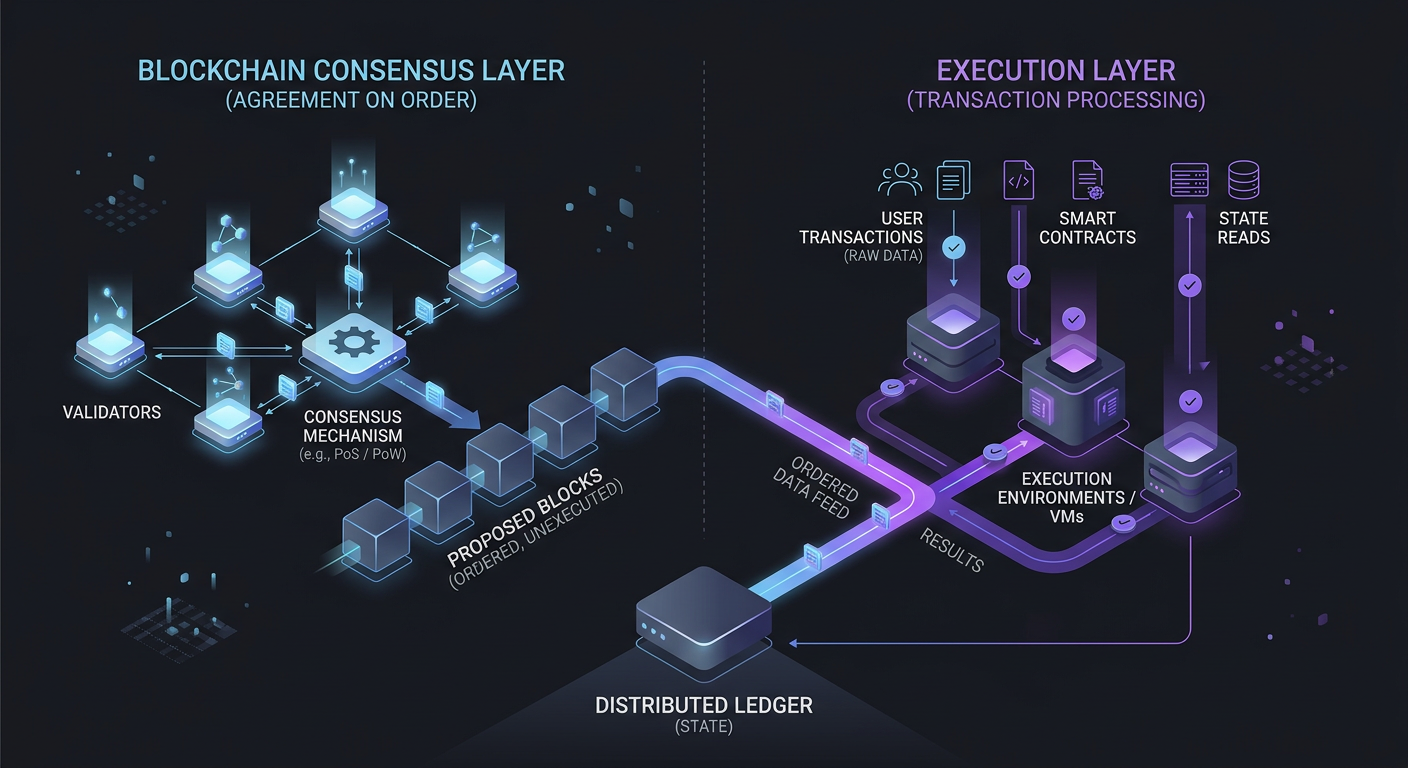
The direct consequence of this decoupling is a 3x improvement in block times, dropping from 600 milliseconds to 200ms. According to Near One, 200ms represents the absolute speed threshold allowed by the speed of light and the physical networks carrying consensus messages across global nodes.
Redefining Finality: Faster Than a PIN Tap
For users, the real-world impact of SPICE will be felt instantly. Defuse Labs CEO Alex Shevchenko noted that after the SPICE upgrade, NEAR’s final confirmation times are expected to drop to approximately 0.4 seconds.
To put that into perspective, the global credit card giant Visa maintains a payment standard of roughly three seconds. At 0.4 seconds, an on-chain transaction will settle faster than you can type a PIN or lift your phone to a point-of-sale terminal.
Fueling the Autonomous AI Agent Economy
While humans will appreciate the "blink and it's done" UX, the true target audience for SPICE is autonomous AI agents. In 2026, the rise of the on-chain agent economy demands speeds that legacy databases simply cannot support. Because software agents operate and communicate exponentially faster than humans, sub-second block times are critical for preventing parallel AI-to-AI transactions from choking the network.
Furthermore, SPICE serves as the foundational milestone on the road to Nightshade 3.0. It unlocks the ability to process long-running, multi-block transactions and lays the structural groundwork for atomic cross-shard execution—the holy grail of blockchain sharding. Coupled with NEAR’s newly launched dynamic resharding and post-quantum safe signing scheme, SPICE positions NEAR as the premier execution layer for the next decade of Web3.


Get the wire in your inbox
Every new signal, straight from the generator. No noise, unsubscribe anytime.