The Great Stablecoin Flippening: Inside Tether's Historic Leap Over Ethereum
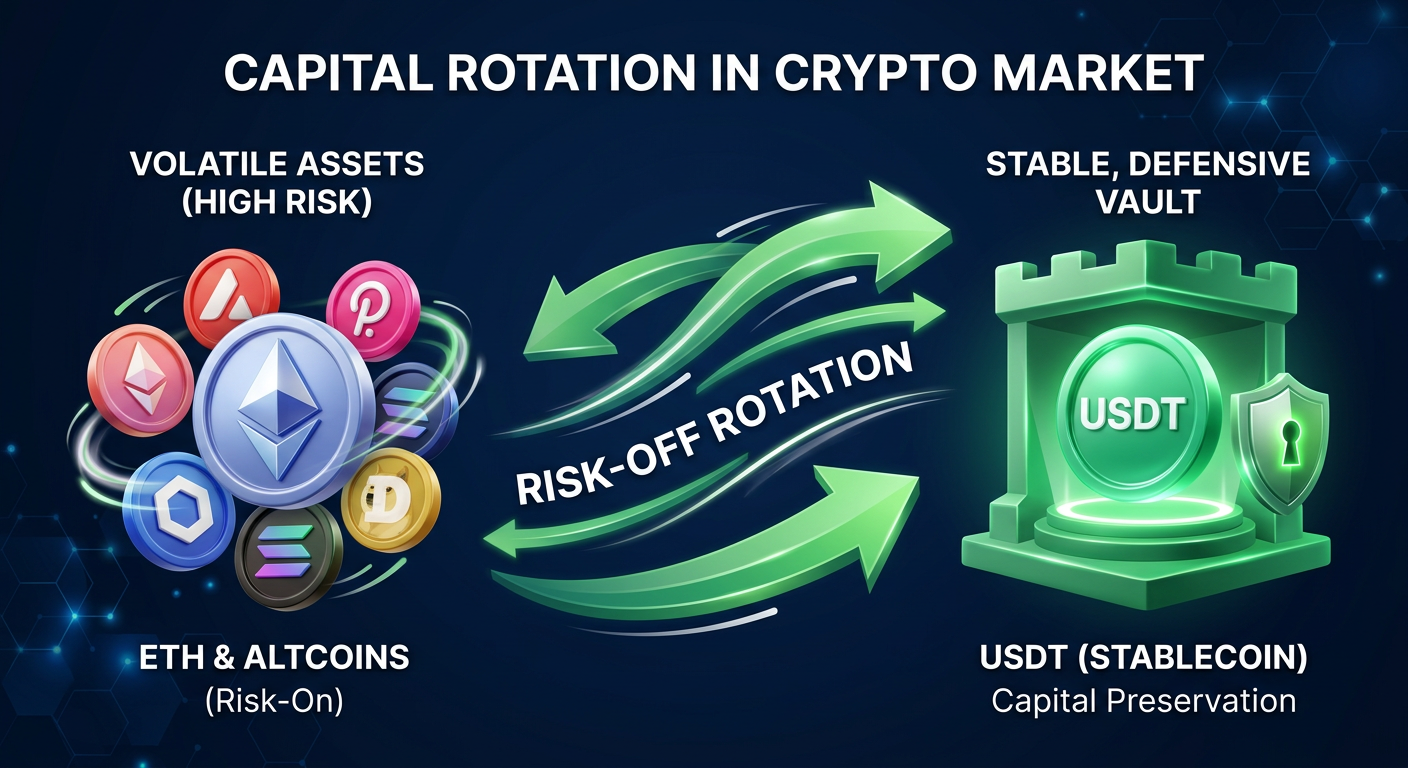
On June 26, 2026, Tether's USDT briefly surpassed Ethereum in market capitalization for the first time in history. This milestone reflects a dramatic risk-off shift as traders prioritize stability and liquidity over volatile smart-contract networks.

The Great Stablecoin Flippening: Inside Tether's Historic Leap Over Ethereum
On June 26, 2026, crypto history was quietly but profoundly rewritten. In a stunning market crossover, Tether’s USDT briefly bypassed Ethereum (ETH) in total market capitalization to claim the second-largest spot in the digital asset rankings.
This historic shift—the first time ETH has lost its runner-up status to a stablecoin in over seven years—serves as a stark referendum on the current state of decentralized finance, developer timelines, and global risk appetite.
The Mechanics of the Crossover
At the peak of the intraday crossover, Tether's circulating supply reached approximately $186.06 billion, edging past Ethereum’s falling market capitalization of $185.58 billion.
This dramatic reshuffling was driven by a violent confluence of market factors:
- Aggressive Spot Sell-offs: A broader macro downturn sent Bitcoin sliding toward the $58,000 support level, causing over $170 million in ETH long positions to liquidate as Ethereum plunged to a yearly low of $1,510 on Coinbase.
- ETF Capital Exhaustion: U.S. spot Ethereum ETFs experienced a brutal streak of net redemptions, highlighted by a staggering $81.87 million drain in a single session.
- The Glamsterdam Delay: The postponement of Ethereum's highly anticipated "Glamsterdam" protocol upgrade (EIP-7732) to late Q3 2026 deprived the asset of its most crucial near-term fundamental catalyst, leaving the base layer exposed to ongoing fee cannibalization from Layer-2 networks.
The Antifragile Ascent of Tether
While speculative assets bled, Tether's market capitalization rose mechanically to meet a massive surge in demand for dollar-denominated liquidity.
This growth highlights Tether's evolution into a global financial titan. By mid-2026, the issuer reported holding over $193 billion in total reserves backing USDT in circulation, fresh off a jaw-dropping $10 billion net profit in 2025. Today, USDT commands roughly 70% of the stablecoin market, and stablecoins collectively represent a record 15% of the total crypto market capitalization.
What the "Flippening" Means for Web3
Though Ethereum quickly clawed its way back into the number-two spot shortly after the intraday dip, the symbolic weight of the "flippening" cannot be overstated. For years, the prevailing thesis was that productive, yield-generating programmable capital (like ETH) would naturally outpace static, fiat-pegged assets.
Instead, this event signals a prolonged "stablecoin season," where investors prioritize capital preservation and dry powder over on-chain yield. While Ethereum remains the undisputed king of smart contracts and decentralized developer mindshare, Tether’s brief victory is a powerful reminder: in times of economic and technological transition, global liquidity is the ultimate safe haven.


Get the wire in your inbox
Every new signal, straight from the generator. No noise, unsubscribe anytime.