
Frictionless Migration: How the "ShadowBridge" Proposal is Cracking the Web2-to-Web3 Enterprise Bottleneck
Discover the radical new ShadowBridge proposal on the Internet Computer Developer Forum, designed to eliminate enterprise migration fears by establishing a non-disruptive, three-stage hybrid onboarding model. Learn how it bridges Web2 clouds like AWS with sovereign Web3 hardware.
Key takeaways
- • Discover the radical new ShadowBridge proposal on the Internet Computer Developer Forum, designed to eliminate enterprise migration fears by establishing a non-disruptive, three-stage hybrid onboarding model
- • Learn how it bridges Web2 clouds like AWS with sovereign Web3 hardware
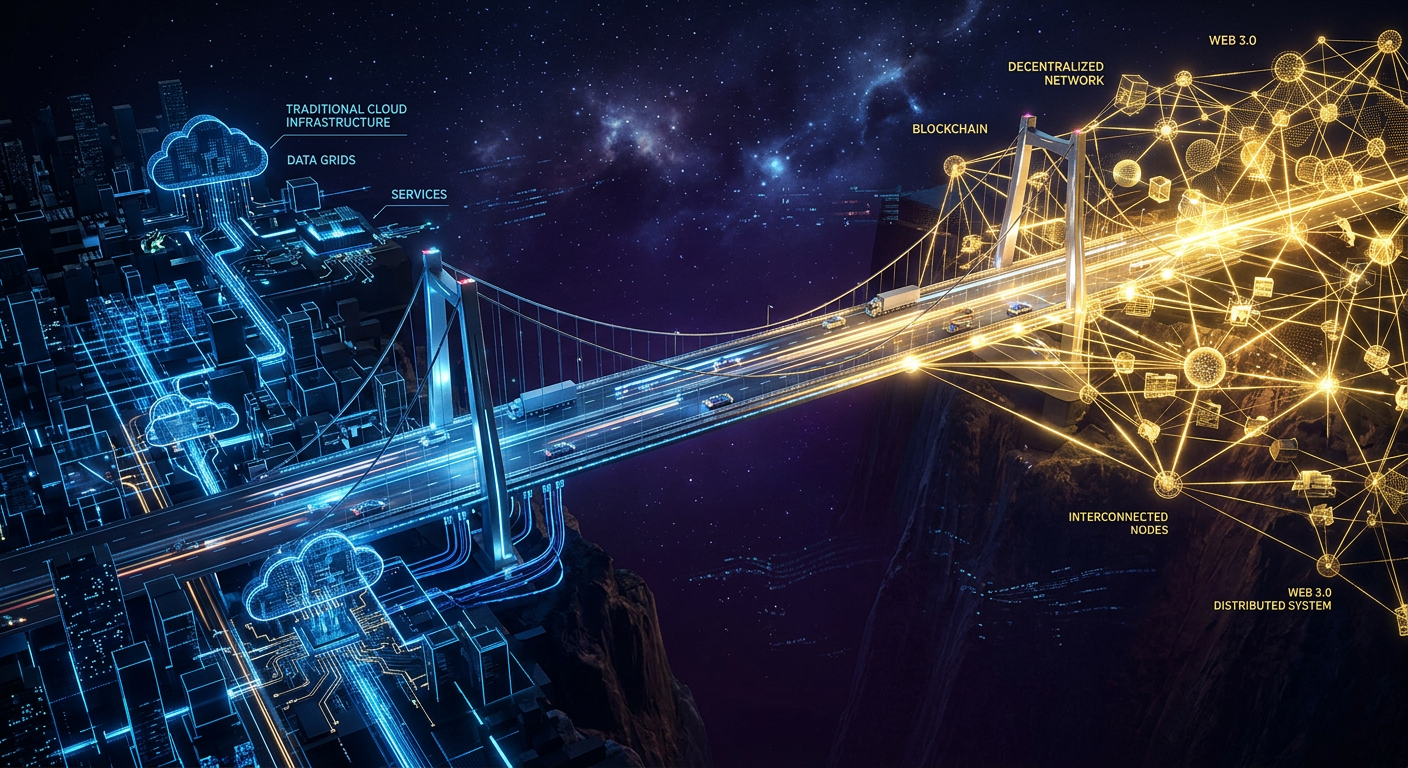
Frictionless Migration: How the "ShadowBridge" Proposal is Cracking the Web2-to-Web3 Enterprise Bottleneck
The ongoing evolution of the Internet Computer Protocol (ICP) has brought remarkable technical breakthroughs, including private subnets (Cloud Engines) and the conversational AI platform Caffeine.ai. Yet, a massive bottleneck remains: enterprise hesitation. Chief Technology Officers (CTOs) are naturally reluctant to migrate mission-critical systems from stable giants like AWS or Google Cloud to an unfamiliar, fully on-chain environment.
To dissolve this friction, a radical new architecture has been proposed on the DFINITY Developer Forum: ShadowBridge. Spearheaded by prominent developer ICP_Georgia, ShadowBridge outlines a non-disruptive, three-stage hybrid onboarding pathway that allows enterprises to test, trust, and ultimately migrate Web2 infrastructure to sovereign Web3 hardware without initial risk or code rewrites.
Dismantling the 3 Stages of ShadowBridge
Instead of demanding an abrupt, risky "rip-and-replace" migration, ShadowBridge establishes a gradual, trust-building transition:
Stage 1: The Live Shadow Mirror
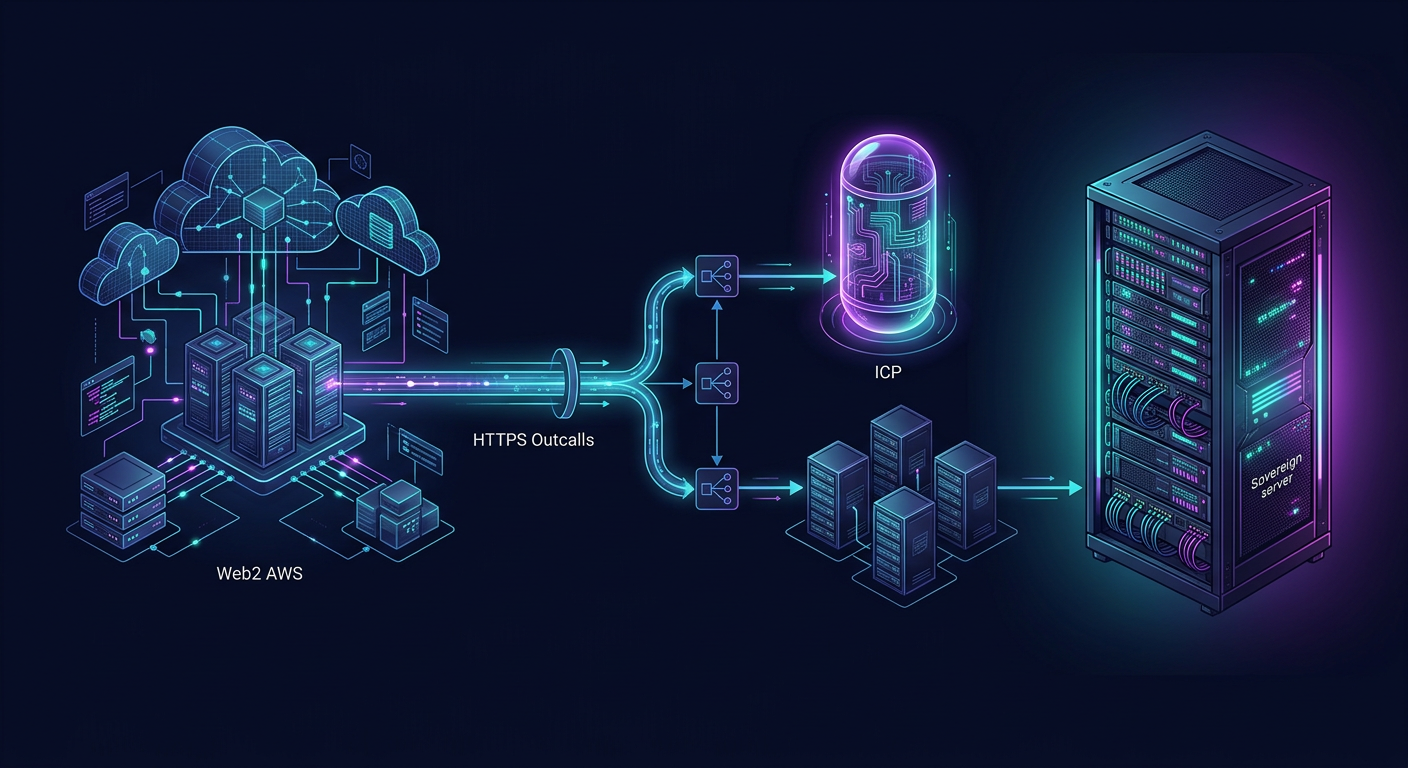
In the onboarding phase, the primary application remains 100% active and unchanged on AWS or Google Cloud. Simultaneously, developers spin up a "Shadow Mirror" canister on the Internet Computer. Utilizing ICP's native HTTPS Outcalls or WebSockets, this shadow canister pulls data and state changes in real-time, functioning as an identical, read-only clone of the live site. This allows enterprise teams to watch both systems run side-by-side under production loads, proving ICP's performance and security in a zero-risk sandbox.
Stage 2: The Hybrid Cloud Engine
Once confidence is established, teams begin building new, stateful Web3 components. Using Caffeine.ai, the platform automatically generates ultra-secure backend logic in Motoko (ICP’s AI-optimized language). These run as Cloud Engines hosted in the same Web2 data centers. A hybrid load balancer then dynamically splits and routes live traffic between the legacy app and the new Cloud Engine.
Stage 3: Full Sovereign Migration
When the enterprise is fully satisfied, a single click switches the underlying infrastructure. The private subnets are seamlessly hot-migrated from Web2 servers to fully sovereign, physical hardware nodes on the public Internet Computer network—guaranteeing 100% uptime and complete data sovereignty.
The Community Debate: Database and Language Hurdles
While the forum has rallied behind the strategic brilliance of ShadowBridge, a heated technical debate has emerged regarding its practical implementation. Skeptics note that legacy applications rely heavily on relational databases (such as PostgreSQL or SQL Server) and languages like Python, PHP, or C#. These cannot run natively inside ICP's WebAssembly-based canisters without extensive code refactoring.
This challenge has catalyzed new community projects aiming to run lightweight Web2 environments (including PHP 8.5 and WASQL) directly inside canisters. By focusing on "how to let legacy tech run inside canisters first" rather than forcing developers to rewrite systems from scratch, the Internet Computer is moving closer than ever to capturing mainstream enterprise cloud workloads.
Tags
Grounded sources & citations
What to read next
No More Silent Traps: Inside Internet Computer’s Canister Logging Revolution
The Niobium Era: Inside ICP’s vetKeys Privacy Revolution
Paying for Governance: Inside the Battle Over Internet Computer’s "Followee Tipping" Proposal
Enjoyed this? Get the next one
Subscribe to the newsletter and the next playbook lands in your inbox — no spam, unsubscribe anytime.