
Paying for Governance: Inside the Battle Over Internet Computer’s "Followee Tipping" Proposal
A highly debated NNS motion proposing mandatory "Followee Tipping" (Performance-Based Voting Rewards) was rejected by the community. The proposal aimed to address the "free-rider" crisis in Web3 governance by routing a 0.1% fee from passive stakers to active voters.
Key takeaways
- • A highly debated NNS motion proposing mandatory "Followee Tipping" (Performance-Based Voting Rewards) was rejected by the community
- • The proposal aimed to address the "free-rider" crisis in Web3 governance by routing a 0.1% fee from passive stakers to active voters
Paying for Governance: Inside the Battle Over Internet Computer’s "Followee Tipping" Proposal
Web3 governance has a massive, open secret: almost nobody actually does the work.
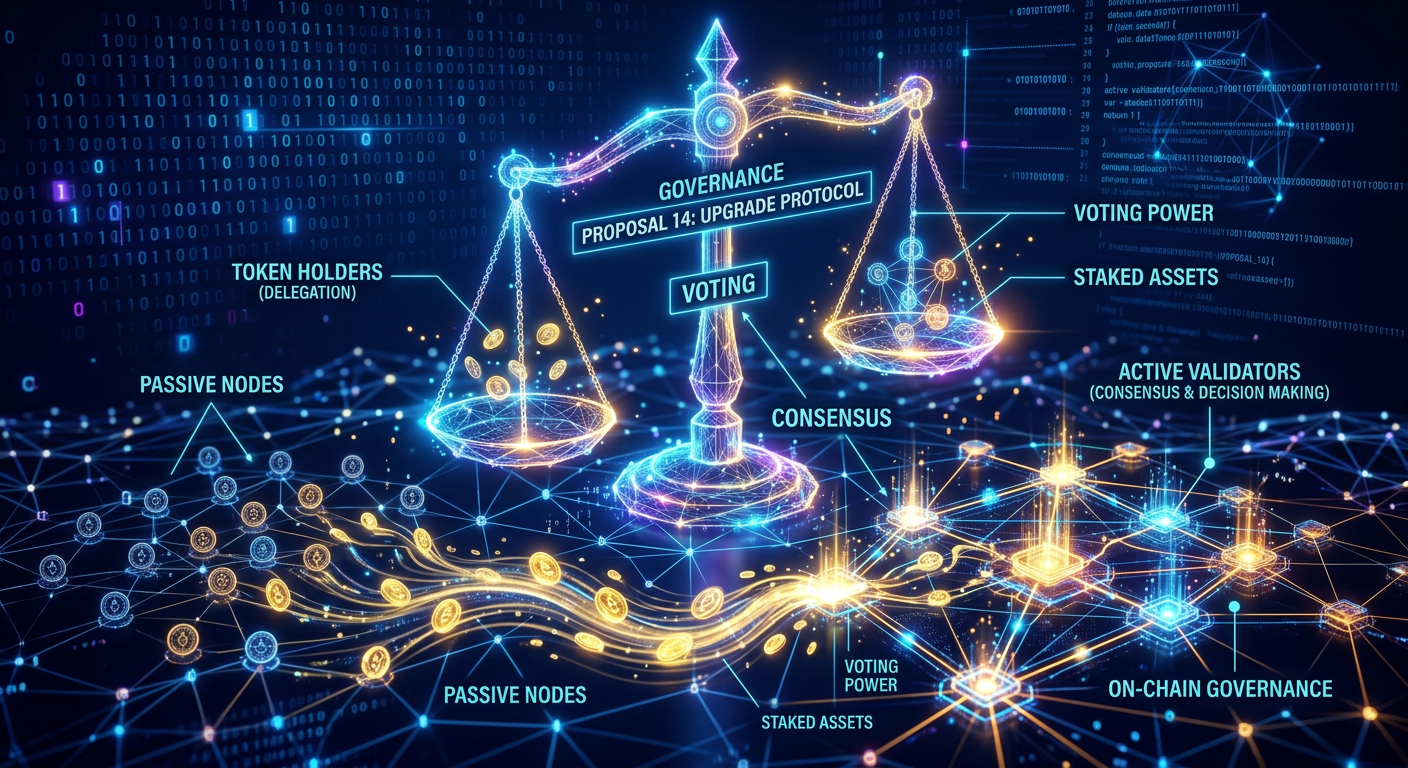
On the Internet Computer, token holders stake ICP as "neurons" to participate in governance through the Network Nervous System (NNS). Because evaluating complex technical proposals requires immense time and expertise, the network allows "liquid democracy"—the ability to configure a neuron to automatically follow other trusted neurons (such as developers, active community members, or the DFINITY Foundation).
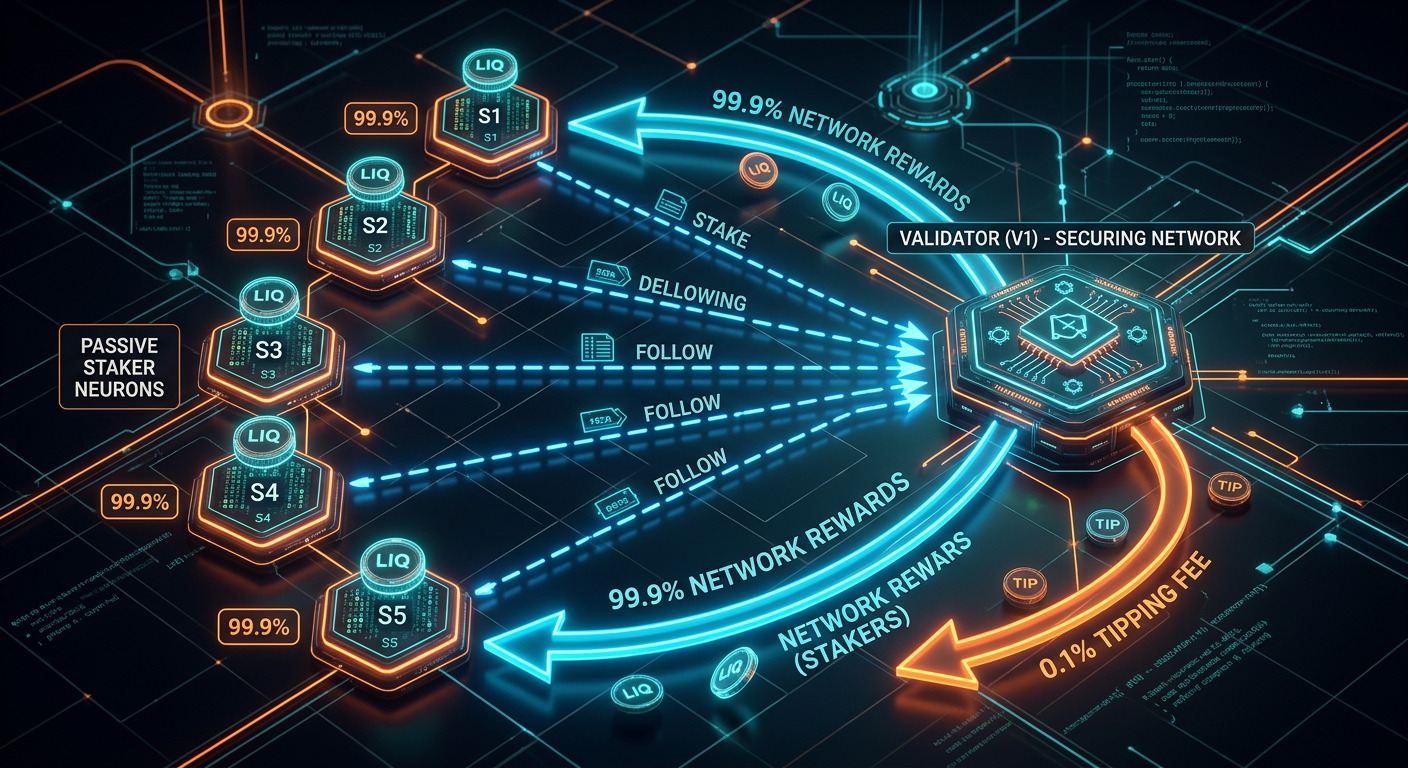
The result? Passive stakers reap 100% of the voting rewards while exerting zero effort. Meanwhile, the followed neurons (the "followees") perform the grueling labor of due diligence for free.
To solve this, a radical proposal known as Performance-Based Voting Rewards (PBVR), or Followee Tipping (Proposals #140214 and #140215), was put forward by a prominent community neuron. Though ultimately rejected, the motion ignited a critical debate over the future of decentralized labor.
The Mechanics of "Followee Tipping"
The PBVR motion proposed a simple yet powerful shift in NNS tokenomics: Following is no longer a free ride.
Under the proposed framework:
- Mandatory Tipping Floor: Any neuron utilizing auto-following would automatically route a tiny portion—suggested at a minimum floor of 0.1%—of its earned voting maturity to the followee neuron(s) that actually cast the vote.
- Configurable Tipping: Users could optionally scale this tip rate up to 100% for custom community initiatives, enabling advanced setups like delegated staking pools.
- Zero Inflation: This is purely a redistribution of existing voting rewards from passive users to active governance providers, requiring no new ICP token minting.
Why the Community Voted "No"
Despite its elegant solution to the free-rider problem, the NNS decisively rejected the motion. Opponents in the DFINITY Developer Forum raised several technical and philosophical flags:
- Centralization Risks: Because the DFINITY Foundation and other massive entities are the most widely followed neurons, a mandatory 0.1% tip would heavily reward already-dominant players, further compounding their governance power.
- The Rise of Kickback Markets: Detractors feared that a tipping fee would incentivize a "race to the bottom," where competitive neurons set up off-chain kickback schemes to attract followers, bypassing the spirit of security.
- Complexity and UX: For the average retail staker, introducing mandatory fees (even at a microscopic 0.1%) complicates the simple, frictionless staking yield model that attracts long-term capital.
The Governance Labor Dilemma
The defeat of PBVR leaves Web3 with an unresolved dilemma. As the Internet Computer implements massive economic overhauls under its newly adopted Mission 70 roadmap—which slashes overall inflation and voting issuance—the demands on governance participants are higher than ever.
Without financial incentives, keeping independent, high-quality "known neurons" active and decentralized remains a major challenge. The battle over Followee Tipping proves that while decentralized networks can automate execution, they still rely on human labor—and figuring out how to pay for that labor is Web3’s next frontier.
Tags
Grounded sources & citations
What to read next
Beyond Canister Control: Inside the Menese Protocol's Canister-User Threshold Signing Breakthrough
The "Friday the 13th" Bug: Inside the ckBTC Double-Minting Postmortem
The Battle Over Geopolitics in Web3: Inside Internet Computer’s Rejected "G20 Subnet" Proposal
Enjoyed this? Get the next one
Subscribe to the newsletter and the next playbook lands in your inbox — no spam, unsubscribe anytime.