OpenAI Unveils "Jalapeño": Inside the Custom AI Chip Designed to Break Nvidia's Stranglehold
OpenAI and Broadcom have officially unveiled "Jalapeño," a custom-built AI inference chip designed to optimize the performance and power efficiency of large language models. Delivered from design to production in a blistering nine months, the processor marks OpenAI's transition into a full-stack hardware powerhouse.

OpenAI Unveils "Jalapeño": Inside the Custom AI Chip Designed to Break Nvidia's Stranglehold
On June 24, 2026, OpenAI formally crossed the Rubicon from software pioneer to hardware powerhouse. In a surprise joint announcement with semiconductor giant Broadcom, the creator of ChatGPT unveiled Jalapeño, its first-ever custom AI accelerator. Described as OpenAI’s first "Intelligence Processor," Jalapeño is a custom application-specific integrated circuit (ASIC) built from the ground up specifically for large language model (LLM) inference.
Why Jalapeño Matters: Demolishing the Inference Bottleneck
For years, the generative AI boom has been held hostage by a massive physical bottleneck: the global shortage and soaring cost of general-purpose GPUs. While GPUs remain the gold standard for training massive neural networks, they suffer from significant efficiency premiums when tasked with the continuous, real-time demand of user queries, known as inference.
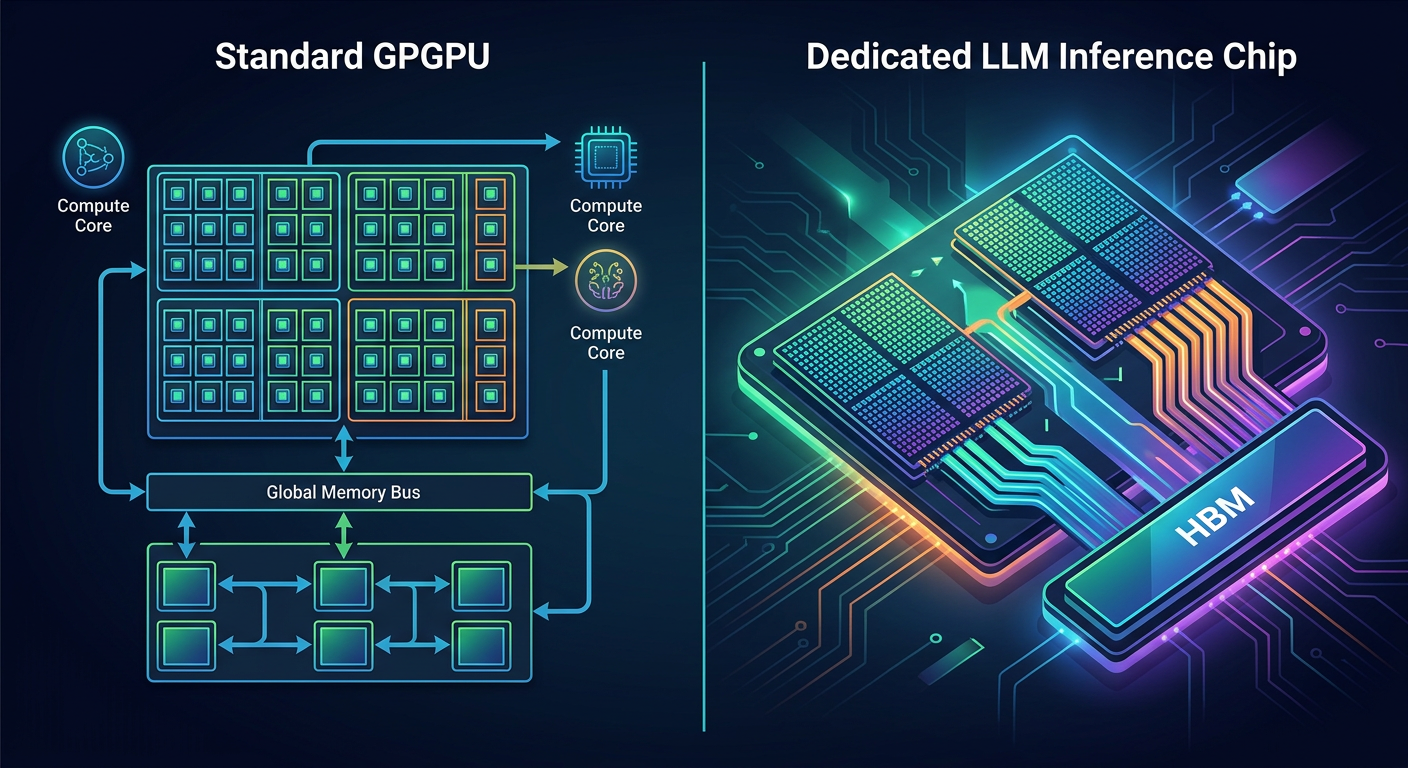
By 2026, inference has grown to represent up to two-thirds of all AI compute expenditures. Jalapeño is OpenAI's direct bid to stop paying the "Nvidia tax". Instead of modifying existing graphics hardware, OpenAI and Broadcom designed Jalapeño to optimize the precise flow of data between compute, high-bandwidth memory (HBM), and advanced networking.
Built by AI, for AI: The Blistering Nine-Month Cycle
Perhaps the most stunning aspect of the announcement is the sheer speed of Jalapeño’s development. The chip went from a blank-slate design to manufacturing tape-out in just nine months. According to Broadcom, this represents one of the fastest development cycles ever achieved for a high-performance advanced semiconductor.
This speed was made possible by deep hardware-software co-development. OpenAI utilized its own frontier AI models to automate and optimize portions of the chip’s layout, physical routing, and validation workflows. In a striking loop of technological self-replication, OpenAI used its current models to build the very silicon that will run its future ones.
Laboratory Performance and Future Scale
Engineering samples of Jalapeño are already up and running in OpenAI’s labs at full production frequency, currently powering active machine learning workloads like the upcoming GPT-5.3-Codex-Spark. While final benchmarks are still being tallied, early lab testing indicates a performance-per-watt advantage that is substantially better than current market alternatives. This has massive implications for mitigating the crippling energy grid demands of modern data centers.
To bring this custom silicon to life at scale, OpenAI has partnered with Canadian electronics manufacturer Celestica to construct the specialized server boards and rack systems. The deployment blueprint is staggering: OpenAI, Broadcom, and Microsoft plan to deploy Jalapeño at a gigawatt scale. Large-scale rack deployments are scheduled to begin in the second half of 2026 and will continue scaling through 2029.
By taking control of its own silicon stack, OpenAI is not only shielding itself from Nvidia’s market monopoly, but is also carving out a future where next-generation AI is drastically cheaper, faster, and built precisely to run the agentic web.


Get the wire in your inbox
Every new signal, straight from the generator. No noise, unsubscribe anytime.