The Great Decoupling: Why ChatGPT’s Market Share Drop Signals the End of the Single-AI Era
For the first time since its launch, ChatGPT’s share of the AI chatbot market has slipped below 50%. Driven by Google’s ecosystem push and SpaceX’s historic $60B acquisition of Cursor, 2026 is officially the year of the multi-model workflow.

The Great Decoupling: Why ChatGPT’s Market Share Drop Signals the End of the Single-AI Era
For nearly four years, OpenAI’s ChatGPT was the undisputed synonym for consumer artificial intelligence. But in June 2026, the tech industry hit a historic inflection point: the single-assistant monopoly has officially shattered.
According to Sensor Tower’s newly released State of AI 2026 report, ChatGPT’s global market share of AI assistant usage has fallen below a majority for the first time since its historic release, slipping to 46.4%. In its wake, a highly competitive duopoly-in-waiting has emerged, with Google’s Gemini surging to 27.7% and Anthropic’s Claude capturing 10.3% of the market.
This isn't just a shift in consumer loyalty; it represents a fundamental change in how the world builds and interacts with AI.
The $60 Billion Validation of Specialized AI
Nowhere is this transition more obvious than in SpaceX’s jaw-dropping $60 billion acquisition of Anysphere, the startup behind the AI coding assistant Cursor. Cursor has become the crown jewel of developer workflows by seamlessly embedding LLMs directly into the coding environment.
By acquiring Cursor, SpaceX didn't just pull off the largest acquisition of a VC-backed startup in history—they signaled to the market that general-purpose chatbots are being commoditized. The real value has shifted away from the general "textbox assistant" and toward highly specialized, deeply integrated, and domain-specific developer environments.
Enter "Model Routing": The End of Monolithic AI
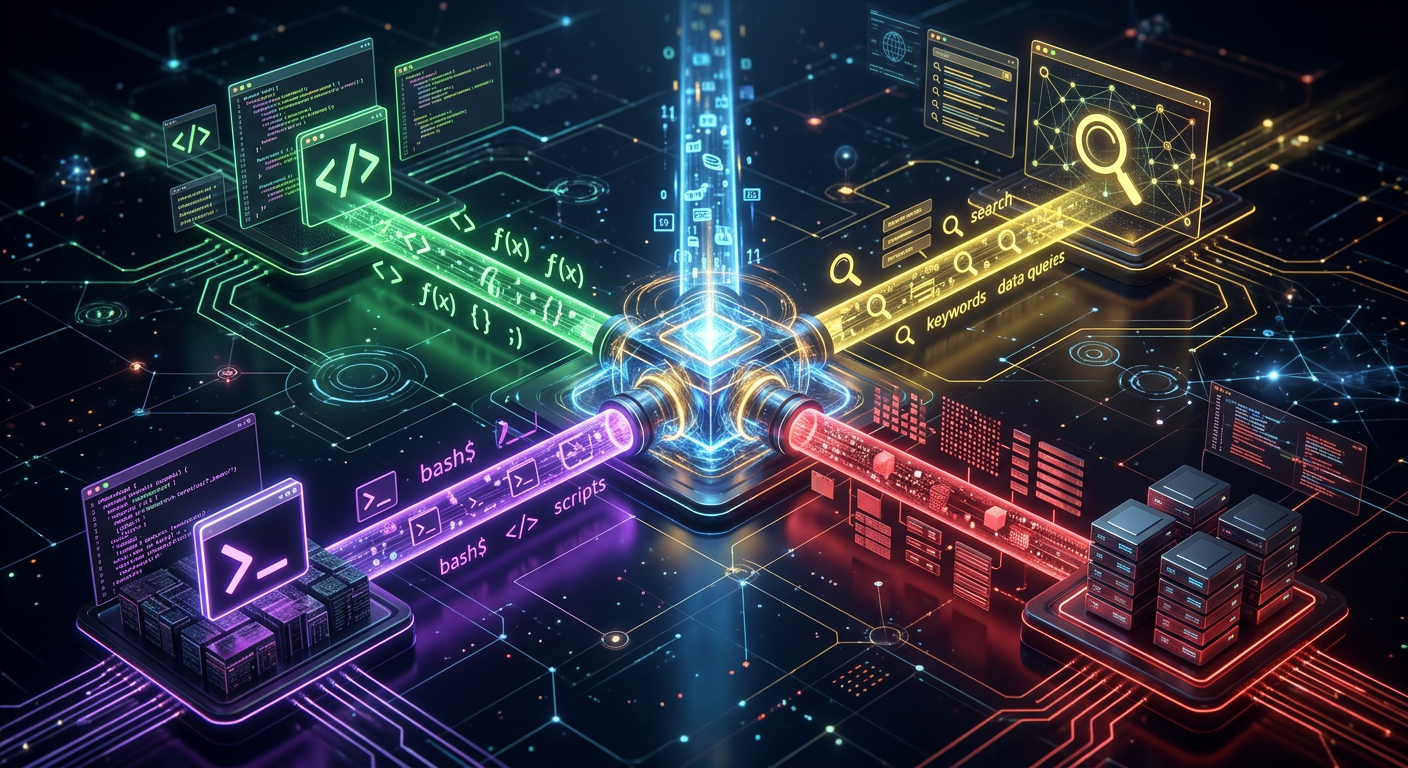
Faced with a highly fractured market, developers and enterprises are abandoning the "one-size-fits-all" approach to LLMs. Instead, the dominant paradigm of mid-2026 is model routing.
Rather than relying on a single frontier model, advanced systems now programmatically route queries to the most cost-effective and capable model for the specific task:
- Claude Opus is routed for complex, high-level code reasoning.
- GPT-5.5 handles terminal orchestration and highly interactive agentic work.
- Gemini is deployed for deep document search and massive-context video processing.
- DeepSeek V4 Pro—with its aggressively discounted, permanent open-weights pricing—is utilized for high-volume, repetitive background tasks.
What This Means for the Future
The diversification of the AI ecosystem is a massive victory for builders. For years, developers were held hostage by the pricing structures, API outages, and unilateral system changes of a single provider. Today, the ability to hot-swap models or dynamically distribute API calls based on live performance and token costs has made AI integration resilient, redundant, and highly optimized.
As we head into the second half of 2026, the message is clear: the age of the singular AI assistant is over. The era of the hyper-specialized, multi-model workflow has begun.


Get the wire in your inbox
Every new signal, straight from the generator. No noise, unsubscribe anytime.