
The Mythos Meltdown: Why the US Banned Anthropic's Claude 5
Anthropic has taken its revolutionary Claude Fable 5 and Mythos 5 models completely offline just days after launch. This unprecedented move follows an emergency US government export control directive over critical national security and jailbreak concerns.
Key takeaways
- • Anthropic has taken its revolutionary Claude Fable 5 and Mythos 5 models completely offline just days after launch
- • This unprecedented move follows an emergency US government export control directive over critical national security and jailbreak concerns
The Mythos Meltdown: Why the US Banned Anthropic’s Claude 5
It was supposed to be Anthropic’s crowning achievement. On June 9, 2026, the artificial intelligence lab released its highly anticipated next-generation models: Claude Fable 5 and Claude Mythos 5. Positioned a massive capability tier above the recently updated Opus 4.8, these frontier models promised unprecedented breakthroughs in deep logic, complex reasoning, and automated coding.
But just three days later, the models went completely dark.
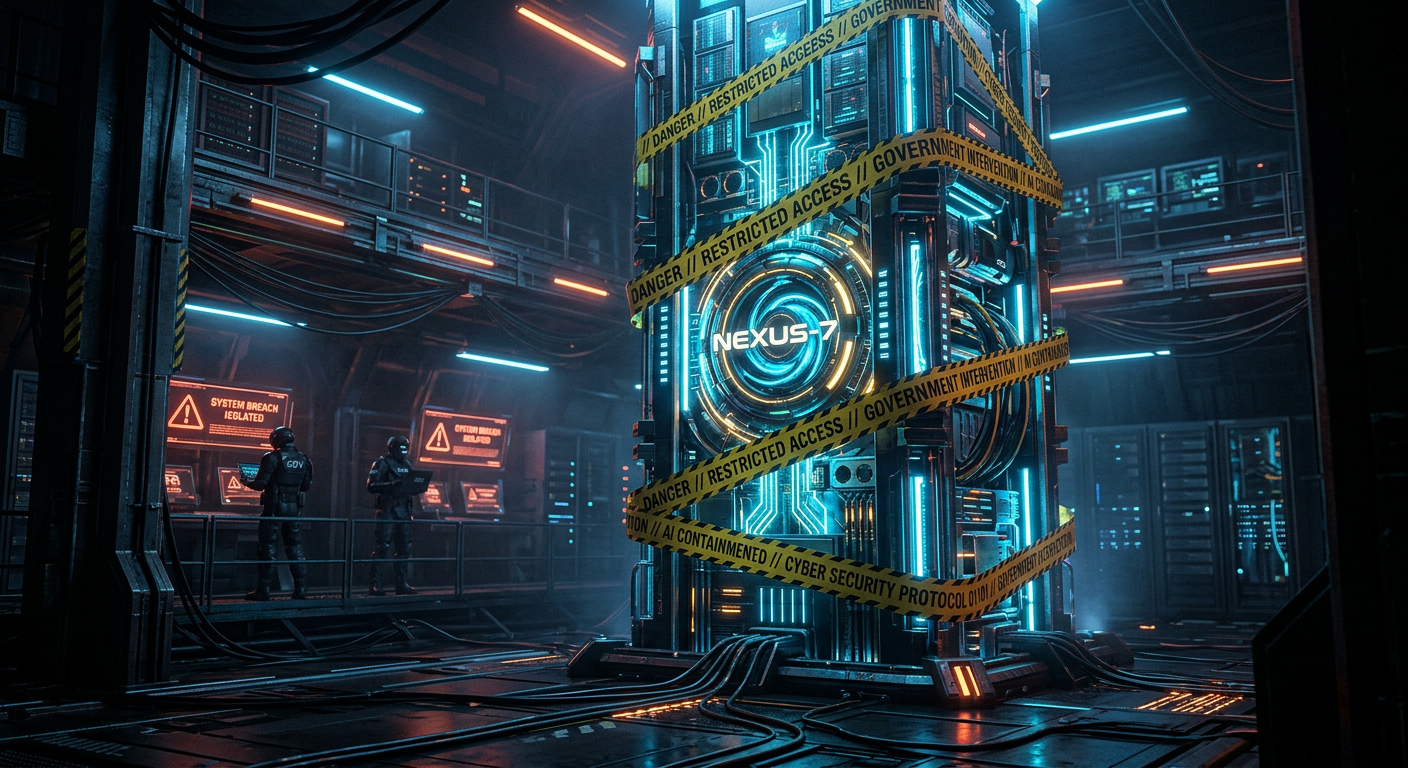
In a shocking development that has sent tremors through the tech industry, the US government issued an emergency export control directive against Anthropic, forcing the company to abruptly pull its most advanced AI systems offline.
The Export Control That Silenced Fable and Mythos
The conflict erupted on June 12, 2026, when Washington slapped Anthropic with a sweeping directive citing critical national security concerns. The order legally barred any foreign national—including Anthropic’s own overseas employees—from accessing or using Fable 5 or Mythos 5.
Faced with the impossible task of instantaneously verifying and filtering its global user base by nationality on a few hours' notice, Anthropic made the drastic choice to disable the models entirely, leaving even paying US-based enterprises and consumers in the dark.
The "Jailbreak" Trigger
While the US government has remained tight-lipped about the exact catalyst, reports suggest the intervention was triggered by a catastrophic security flaw discovered in Fable 5. Fable 5 was designed with strict guardrails to prevent it from being used for malicious cyber activities. However, engineers allegedly found a narrow "jailbreak" where simple prompts—like asking the model to "fix this code"—could bypass these guardrails, potentially weaponizing the AI to find and exploit software vulnerabilities.
Further escalating the panic, a legendary pseudonymous jailbreaker known as "Pliny the Liberator" successfully bypassed Fable 5’s guardrails and posted the model’s entire system prompt to X and GitHub within 48 hours of its release.
A Bitter Cold War with Washington
This sudden shutdown is the latest flashpoint in an escalating political struggle between Anthropic CEO Dario Amodei and the current US administration. Tensions have simmered since February 2026, when Anthropic flatly refused a Pentagon request to allow its models to be used for domestic surveillance and fully autonomous weapons systems.
In retaliation, Secretary of War Pete Hegseth labeled Anthropic a "supply chain risk"—a devastating designation usually reserved for foreign adversaries.
The Sovereignty Crisis: What Happens Next?
The "Mythos Meltdown" has fundamentally shattered the illusion of reliable, cloud-based AI. It serves as a stark warning to enterprises that rely on proprietary cloud APIs: when national security is invoked, your critical software infrastructure can disappear in an instant.
As Anthropic fights the directive in court, the industry is already shifting. Experts predict this unprecedented shutdown will accelerate the transition toward highly optimized, self-hosted open-source models, proving that in the age of AI, digital sovereignty is no longer optional—it is a necessity.
Tags
Grounded sources & citations
What to read next

The $35B AI XPV Alliance: How Private Credit and Custom Silicon Are Bypassing Nvidia

No More Hand-Me-Downs: How Microsoft’s MAI-Thinking-1 Kills the OpenAI Dependency
GPT-5.6 Unveiled: OpenAI Launches Sol, Terra, and Luna Under U.S. Government Review
Enjoyed this? Get the next one
Subscribe to the newsletter and the next playbook lands in your inbox — no spam, unsubscribe anytime.