
The Operational Maturity of DePIN: Inside io.net's Tokenomics Revolution and CrowdBrain's Robotics Breakthrough
The Decentralized Physical Infrastructure Network (DePIN) sector has officially graduated from inflationary speculation to cash-flow-driven utility. Driven by io.net's revolutionary "Incentive Dynamic Engine" token burn and CrowdBrain AI’s robotics hackathon triumph, DePIN is reshaping the relationship between blockchain and the physical world.
Key takeaways
- • The Decentralized Physical Infrastructure Network (DePIN) sector has officially graduated from inflationary speculation to cash-flow-driven utility
- • Driven by io.net's revolutionary "Incentive Dynamic Engine" token burn and CrowdBrain AI’s robotics hackathon triumph, DePIN is reshaping the relationship between blockchain and the physical world

The Operational Maturity of DePIN: Inside io.net's Tokenomics Revolution and CrowdBrain's Robotics Breakthrough
For years, Decentralized Physical Infrastructure Networks (DePIN) battled the skepticism of Web3 critics. Detractors argued that these networks relied on unsustainable inflationary token emissions to recruit hardware suppliers who would inevitably dump their rewards and trigger network collapse.
By mid-2026, that narrative has completely dissolved. Led by two major milestones in June 2026, the DePIN landscape has transitioned from subsidized experimental networks into a highly sophisticated, cash-flow-backed market.
1. The Death of the Subsidy Spiral: io.net’s Incentive Dynamic Engine (IDE)
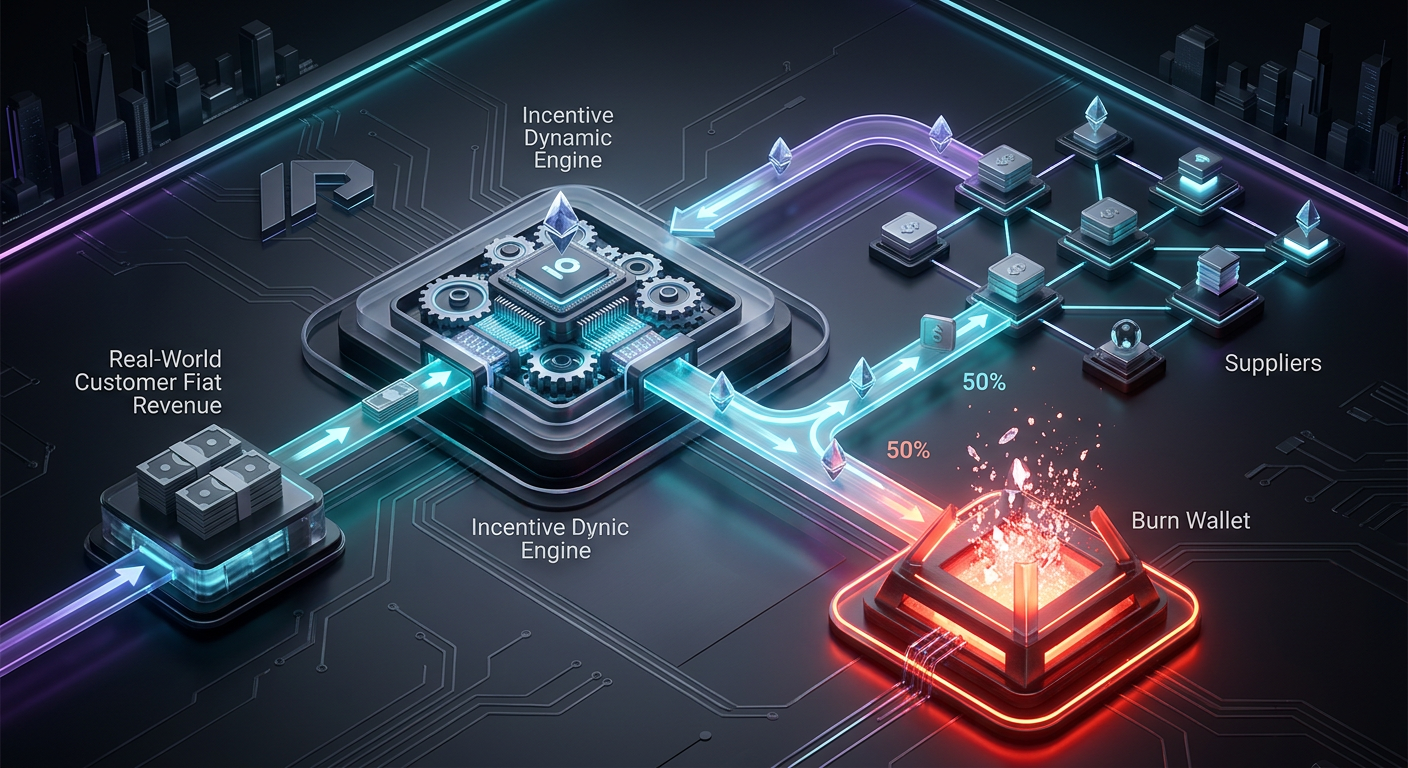
On June 11, 2026—coinciding with its third anniversary—io.net officially launched its Incentive Dynamic Engine (IDE). This represents a paradigm shift in decentralized cloud compute economics.
Historically, supplier retention in DePIN was vulnerable to token volatility. If a network’s native token dropped in value, hardware providers abandoned ship, destroying network reliability. Under the IDE, io.net permanently changes this dynamic:
- Dollar-Value Pegging: Suppliers are compensated on a stable, fiat-pegged basis, protecting them from market downturns.
- Deflationary Combustion: At least 50% of all post-payout network revenue paid in $IO tokens is permanently burned.
The scale of this operation is backed by real enterprise demand. Alongside the IDE rollout, io.net disclosed an $8 million enterprise contract generating roughly $650,000 in monthly on-chain earnings. The network is also processing upwards of 4 billion AI inference tokens daily on OpenRouter. Based on this volume, the IDE is projected to burn at least 12 million $IO tokens over the next twelve months.
2. The Cyber-Physical Frontier: CrowdBrain AI Wins the Solana Frontier Hackathon
While io.net re-engineered the digital backbone of AI compute, the physical frontier of DePIN expanded into active machinery. On June 26, 2026, Colosseum crowned CrowdBrain AI as the Grand Champion of the Solana Frontier Hackathon.
Out of a record-shattering pool of 10,000+ developers and 2,857 project submissions, CrowdBrain AI secured the top prize with a vertically integrated Robotics DePIN:
- Simulation & Training: Virtual environments train human operators to handle robotic hardware.
- Quality Assurance (QA): Operators undergo on-chain skill verification and QA certification.
- Dynamic Teleoperation: Certified operators are routed to physical robots globally for remote operation, critical data collection, and failure recovery tasks.
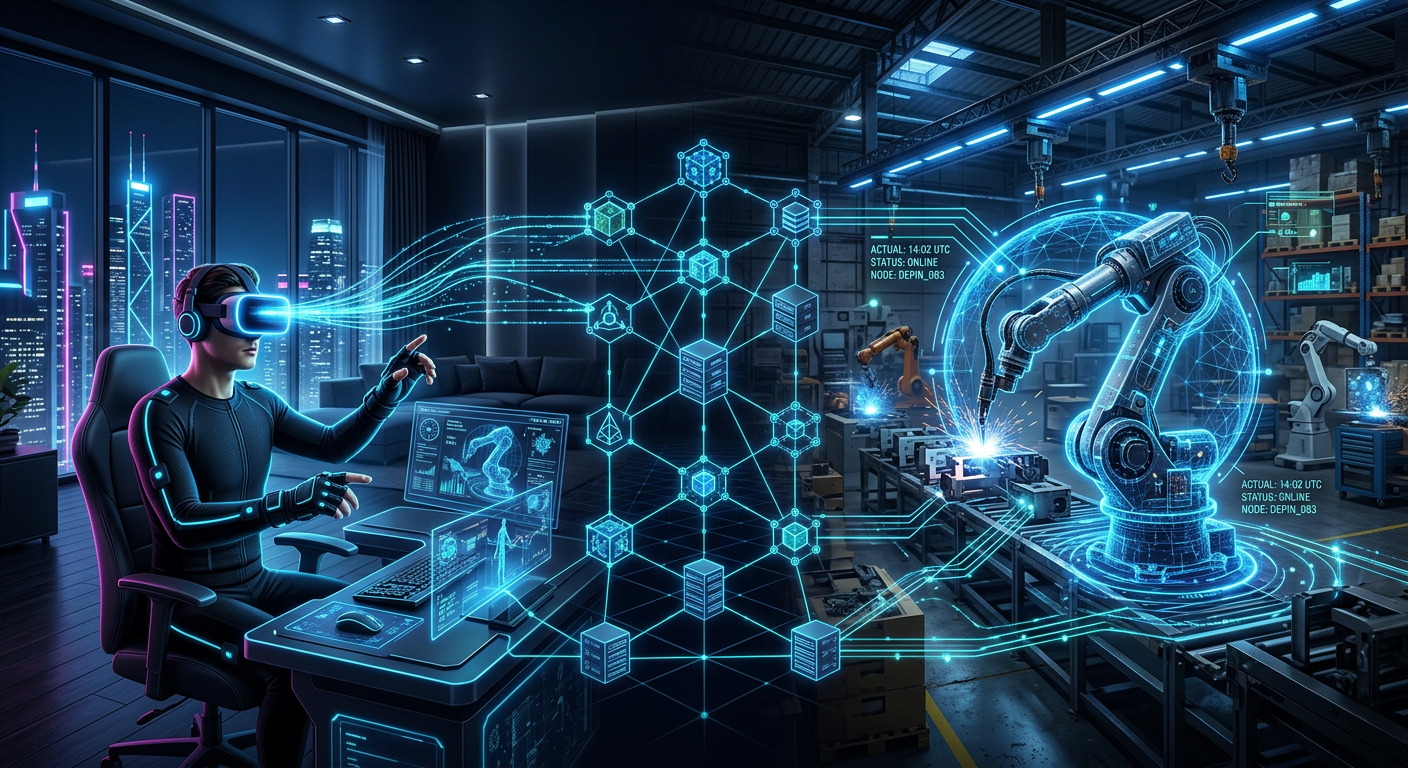
This expansion into cyber-physical interaction demonstrates that DePIN is no longer confined to passive hard drives or idle graphics cards. It is moving into human-in-the-loop, active physical automation.
The Dawn of Real-World Utility
The dual breakthroughs of mid-2026 prove that the DePIN sector has matured. Projects are no longer merely "proving they can work"; they are proving they can outperform. With actual business volume driving token scarcity and decentralized coordination scaling to control real-world robotics, DePIN has become the true physical backbone of the next industrial era.
Tags
Grounded sources & citations
What to read next
Hardware as a Smart Contract: Inside IoTeX’s "Yap" Upgrade and the Death of Verbose DePIN Telemetry
Vercel Launches Eve: The Filesystem-First Framework Redefining Production AI Agents
Unmoving Memory: Inside Rust’s Radical In-Place Initialization and Field Projection Upgrades
Enjoyed this? Get the next one
Subscribe to the newsletter and the next playbook lands in your inbox — no spam, unsubscribe anytime.