
The Silent Handshake: How Uplink is Merging DePIN with WBA’s OpenRoaming to Rewrite Global Wi-Fi Economics
DePIN protocol Uplink has officially bridged the gap between Web3 and enterprise telecom by introducing its "Managed Marketplace" for Wi-Fi offloading. By integrating directly with the Wireless Broadband Alliance's OpenRoaming and Passpoint standards on an Avalanche L1, Uplink turns standard consumer Wi-Fi routers into institutional-grade, auto-negotiating connectivity nodes without the race-to-the-bottom pricing traps of early decentralized networks.
Key takeaways
- • DePIN protocol Uplink has officially bridged the gap between Web3 and enterprise telecom by introducing its "Managed Marketplace" for Wi-Fi offloading
- • By integrating directly with the Wireless Broadband Alliance's OpenRoaming and Passpoint standards on an Avalanche L1, Uplink turns standard consumer Wi-Fi routers into institutional-grade, auto-negotiating connectivity nodes without the race-to-the-bottom pricing traps of early decentralized networks
The Silent Handshake: How Uplink is Merging DePIN with WBA’s OpenRoaming to Rewrite Global Wi-Fi Economics
For years, wireless Decentralized Physical Infrastructure Networks (DePIN) suffered from two major bottlenecks: the necessity of specialized, expensive proprietary hardware and the extreme volatility of early tokenomics. But the sector has reached an operational inflection point. At the Wireless Global Congress (WGC) in Dallas, Uplink officially unveiled its Connectivity Marketplace, bridging Web3 directly into legacy enterprise telecom.
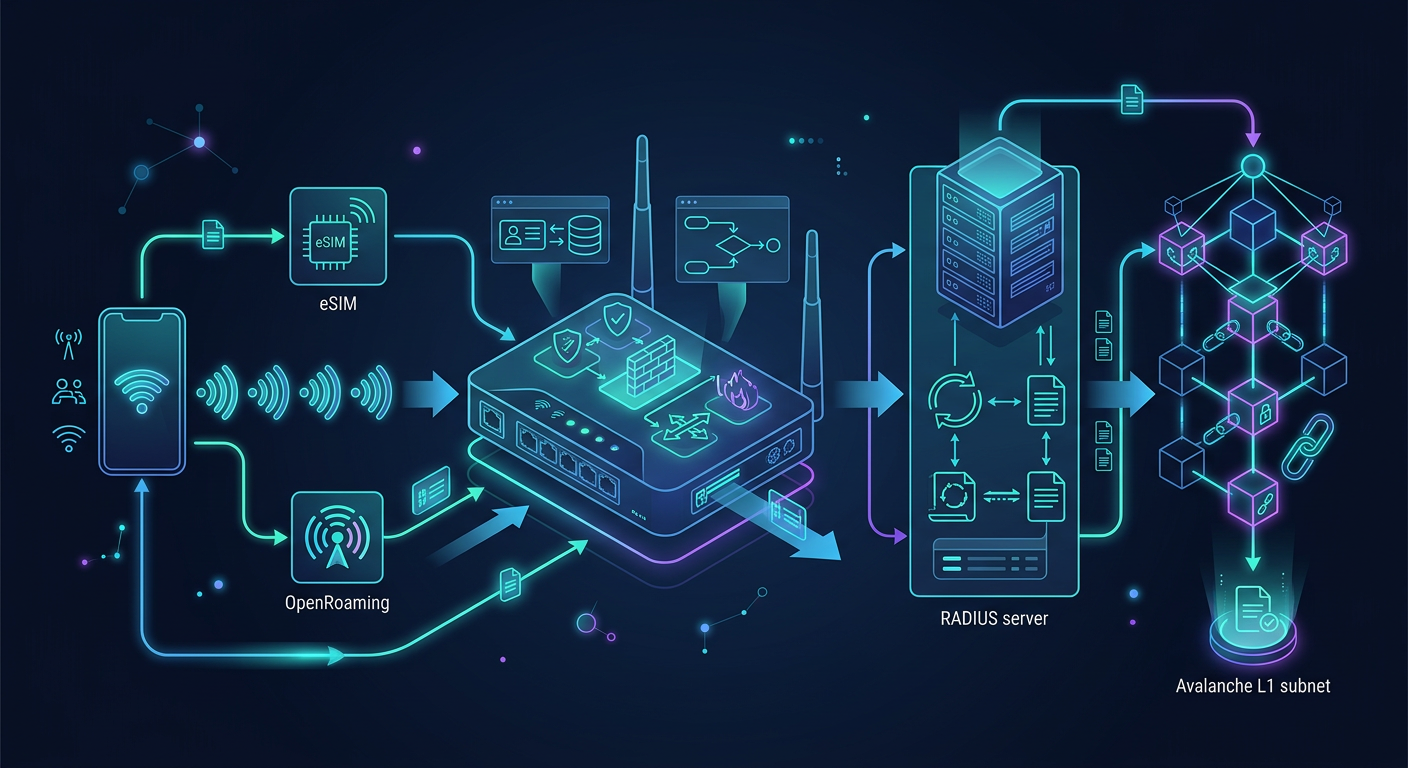
Instead of forcing users to buy bespoke "miner" routers, Uplink leverages standard home Wi-Fi networks and existing consumer hardware. By becoming the first DePIN project to earn both Identity Provider (IDP) and Access Network Provider (ANP) certifications from the Wireless Broadband Alliance (WBA), Uplink natively integrates with OpenRoaming and Passpoint. These are the global industry standards that allow mobile devices to automatically and securely connect to public Wi-Fi without manual logins.
The Managed Marketplace: Ending the "Race to the Bottom"
Early iterations of decentralized marketplaces fell victim to direct price-undercutting. If node operators compete solely on raw, uncurated public pricing, margins quickly erode, causing quality providers to abandon the network.
To solve this, Uplink introduced its Managed Marketplace Model. Rather than hosting a chaotic, public bidding war, Uplink acts as a neutral economic layer that aggregates carrier and eSIM demand, dynamically routing mobile offload traffic across a curated pool of Wi-Fi suppliers. Suppliers are classified into standardized Service Level Agreement (SLA) tiers (e.g., Bronze, Silver, Gold), allowing them to compete on connection quality, uptime, and performance rather than price alone.
Fueling Settlement via Avalanche L1
At the protocol level, Uplink runs as a dedicated Layer 1 subnet on Avalanche. This design choice is critical for two primary reasons:
- Sub-second Finality: The chain seamlessly handles the immense transaction volume of micro-settlements as millions of consumer devices hop across local nodes.
- Legacy Compatibility: The blockchain layer acts as a neutral settlement exchange that natively ingests standard telecom accounting protocols (such as RADIUS and Diameter).
Carriers can offload cellular data traffic to local residential Wi-Fi networks, and the transaction is priced, validated, and settled transparently in real time on-chain—with zero manual reconciliation backlogs.
With over 5 million registered routers globally, Uplink is turning dormant home bandwidth into active, monetizable infrastructure. By conforming to legacy enterprise standards instead of trying to force telecoms to rebuild their stacks from scratch, Uplink has provided the blueprint for the next phase of DePIN: invisible, ubiquitous, and economically sustainable.
Tags
Grounded sources & citations
What to read next

Beyond Passive Hardware: Inside peaqOS Stream and the ERC-3643 Machine Tokenization Revolution

The Operational Maturity of DePIN: Inside io.net's Tokenomics Revolution and CrowdBrain's Robotics Breakthrough

Hardware as a Smart Contract: Inside IoTeX’s "Yap" Upgrade and the Death of Verbose DePIN Telemetry
Enjoyed this? Get the next one
Subscribe to the newsletter and the next playbook lands in your inbox — no spam, unsubscribe anytime.