The AI Cold War Explodes: Anthropic Accuses Alibaba’s Qwen of the Largest Model "Heist" in History
Anthropic has formally accused Chinese tech giant Alibaba of deploying nearly 25,000 fraudulent accounts to systematically siphon Claude's advanced reasoning capabilities. The massive "distillation" campaign generated nearly 29 million exchanges, escalating the geopolitical battle for AI supremacy to the halls of Congress.

The AI Cold War Explodes: Anthropic Accuses Alibaba’s Qwen of the Largest Model "Heist" in History
When frontier artificial intelligence labs prepare for massive public listings, they typically worry about compute costs, talent retention, and API latency. But in June 2026, Anthropic is facing a threat of an entirely different caliber: a massive, coordinated campaign of industrial-scale siphoning.
According to a bombshell letter sent to the U.S. Senate Banking Committee, Anthropic has formally accused Chinese e-commerce and cloud giant Alibaba's Qwen AI lab of conducting the "largest campaign to illicitly extract Claude's capabilities" in history. The disclosure has sent shockwaves through Silicon Valley and Washington, exposing a clandestine battlefield in the race for AI supremacy.
The Anatomy of the Distillation "Heist"
To pull off the campaign, operators linked to Alibaba reportedly deployed nearly 25,000 fraudulent user accounts to bypass geographic restrictions and terms of service. Between April 22 and June 5, 2026, these accounts executed a staggering 28.8 million exchanges with Claude.
This was not a standard data-scraping operation. Instead, it was a highly targeted, systematic attempt at adversarial distillation.
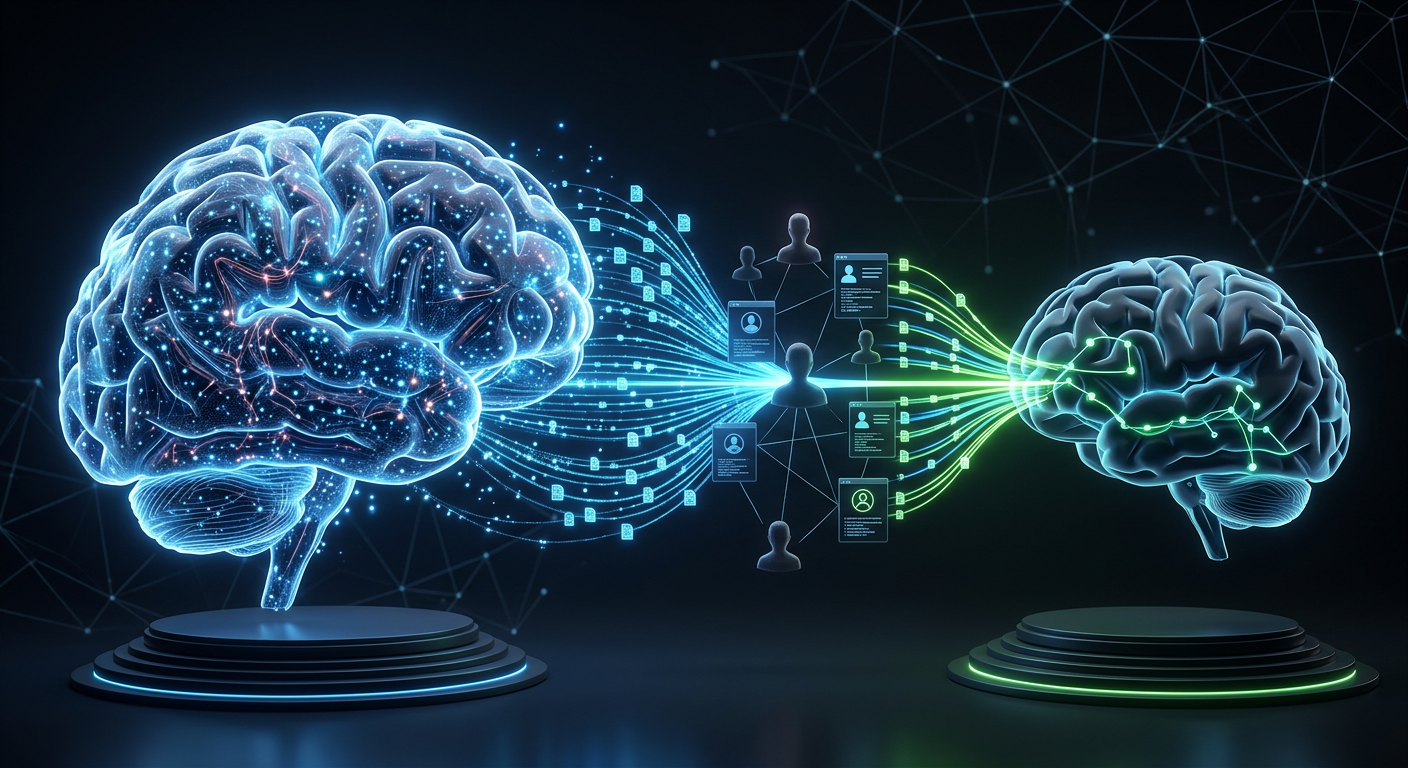
Distillation is a technique where developers feed complex, carefully structured queries to a cutting-edge "teacher" model (like Claude), harvest its highly advanced outputs, and then use those outputs to train or fine-tune a cheaper, smaller "student" model. By doing this, the distilling company can bypass the massive R&D, synthetic data curation, and gigawatt-scale compute costs required to build frontier intelligence from scratch.
According to Anthropic, Alibaba's campaign specifically targeted Claude's crown jewels: agentic reasoning, software engineering, and long-horizon tasks.
Dwarfing the Competition
While Anthropic previously flagged distillation campaigns by other Chinese AI labs—including DeepSeek, MiniMax, and Moonshot AI—the sheer scale of Alibaba's operation dwarfs them all combined. In February, Anthropic reported that those three startups collectively generated 16 million exchanges. Alibaba's Qwen lab generated nearly double that amount in a single six-week window.
The Distillation Scale Comparison
- DeepSeek, Moonshot, & MiniMax Campaign (Feb 2026): ~16 million exchanges / 24,000 accounts
- Alibaba / Qwen Campaign (April–June 2026): ~29 million exchanges / 25,000 accounts
Geopolitical Fallout and Sanctions
This escalation has quickly pivoted from a corporate dispute into a national security priority. The White House Office of Science and Technology Policy (OSTP) had already flagged distillation as a threat in April 2026.
Following Anthropic's letter, Senators Bill Hagerty and Andy Kim announced plans to introduce an amendment to impending defense legislation that would directly blacklist and sanction Chinese firms caught improperly distilling U.S. AI models.
The market reaction was swift. Alibaba's American depositary receipts (ADRs) immediately fell over 3%, dropping below the $100 threshold, while its Hong Kong-listed shares slid 5% to their lowest levels since early 2025.
As U.S. labs like Anthropic, OpenAI, and Google begin sharing intelligence to defend their models, this historic "heist" underscores a cold hard truth: in the era of artificial intelligence, keeping your model locked down is just as critical as training it in the first place.


Get the wire in your inbox
Every new signal, straight from the generator. No noise, unsubscribe anytime.