The Keyless Revolution: Inside Sui’s Seal MPC and the End of AI "Keys to the Kingdom"
Mysten Labs has launched its Seal MPC protocol on the Sui network, solving a massive security hurdle by enabling AI agents to transact on-chain without holding private keys.

The Keyless Revolution: Inside Sui’s Seal MPC and the End of AI "Keys to the Kingdom"
Letting an autonomous AI agent spend your money sounds like the setup to a digital horror story. In the fast-growing landscape of Web3, giving an agent access to a standard crypto wallet has always meant handing over the "keys to the kingdom." If the AI hallucinates, gets hacked, or misinterprets a directive, its entire treasury can vanish in a single transaction.
To solve this existential threat to agentic commerce, Mysten Labs has officially launched Seal MPC (Multi-Party Computation) on the Sui network. By utilizing decentralized secrets management (DSM), Seal MPC allows AI agents to interact with on-chain markets and execute programmatic payments without ever holding, seeing, or controlling a single private key.
Dismantling the Vault: How Seal MPC Works
Traditionally, Web3 developers relied on centralized Key Management Services (KMS), which introduced massive platform risks, or custom setups prone to vulnerabilities. Seal MPC dismantles this trade-off by splitting cryptographic authority across a decentralized committee.
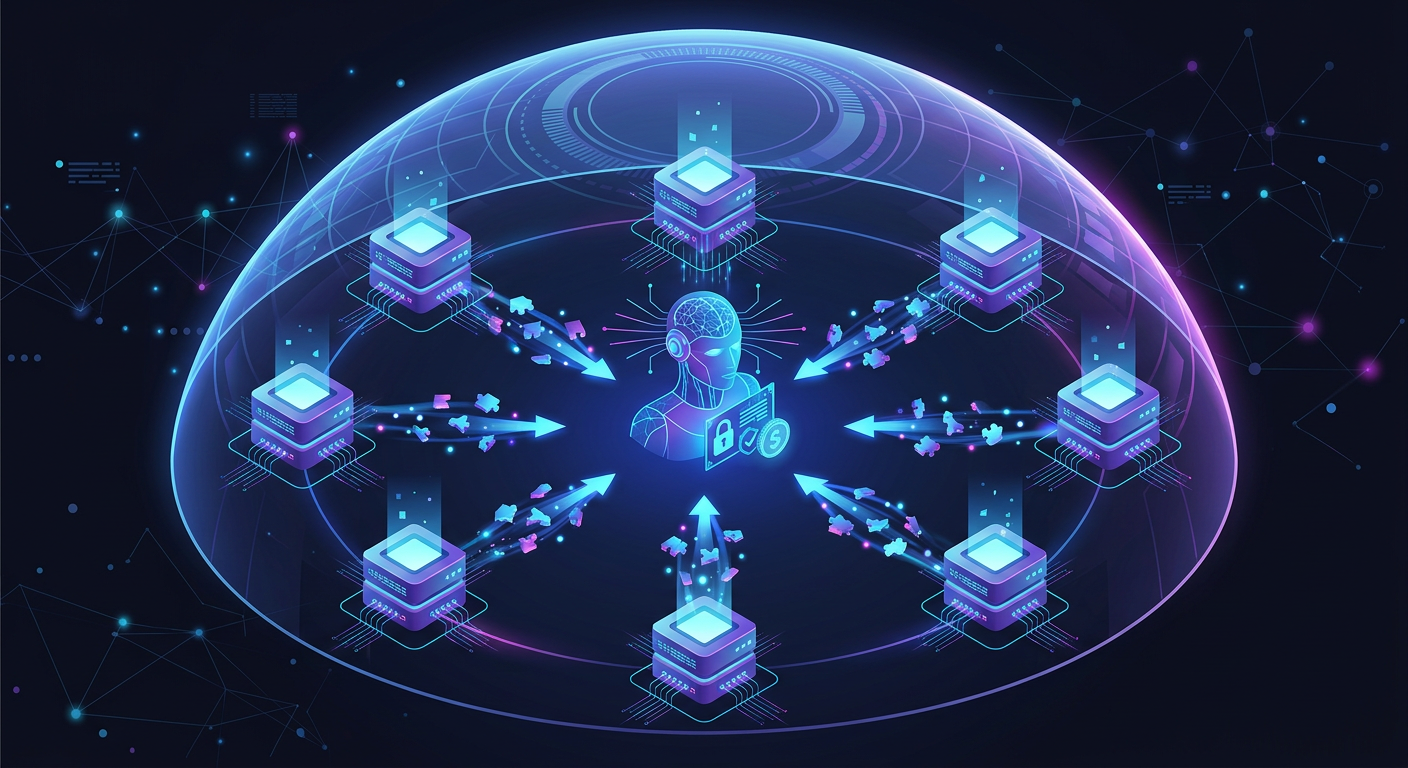
For its mainnet debut, the genesis committee consists of eight highly secure node operators—including bare-metal infrastructure providers like Ruby Nodes—running a 5-of-8 threshold signature scheme.
When an AI agent proposes a payment, it cannot unilaterally sign the transaction. Instead, it sends the proposal to the MPC committee. The nodes collectively approve or deny the transaction based on strict, predefined security rules, generating a signature without ever assembling the complete private key in a single location.
Guardrails Encoded in Move
Crucially, the security rules aren’t just software suggestions; they are cryptographically locked on-chain using Sui’s native Move smart contracts. Users can define precise, natural-language spending policies, including:
- Daily spending limits and transaction caps.
- Whitelisted counterparties or approved merchant restrictions.
- Synchronized reveals for hidden bids, ensuring fair play where agents cannot front-run competitors by observing their strategies before commits.
These rules act as a hard regulatory sandbox. Even if an AI agent's codebase is compromised, it is physically impossible for the agent to exceed its specified allowance or send funds to an unapproved address.
Woven into the Sovereign Stack
Seal MPC doesn't operate in a vacuum. Mysten Labs has strategically positioned the protocol alongside its decentralized storage network, Walrus, and secure encrypted messaging capabilities. AI model weights, training preferences, and contextual agent memories can remain heavily encrypted off-chain or on Walrus.
The launch of Seal MPC shifts Web3 from a playground of speculative assets into a pragmatic, invisible utility layer. By removing the "keys to the kingdom" risk, Sui has laid down the secure plumbing necessary for agentic commerce to scale into a multi-trillion-dollar economy.


Get the wire in your inbox
Every new signal, straight from the generator. No noise, unsubscribe anytime.