The Silicon Economy Arrives: Inside AIxCrypto's Web3 Infrastructure for Autonomous Robots
AIxCrypto has launched RoboShare and AIXC01, bridging Web3 with Embodied AI to give physical robots autonomous digital identity, tamper-proof operational logs, and native blockchain settlement layers.

The Silicon Economy Arrives: Inside AIxCrypto's Web3 Infrastructure for Autonomous Robots
In the early years of Web3, critics often complained that decentralized protocols were detached from the physical world. However, at the Automate 2026 exhibition in Chicago, NASDAQ-listed AIxCrypto (AIXC) completely shattered that boundary. The company unveiled a groundbreaking convergence of Embodied AI (EAI), Real-World Assets (RWA), and Web3 infrastructure, officially launching its on-demand robot rental marketplace, RoboShare, alongside AIXC01—a dedicated decentralized network designed to give physical robots economic agency.
Historically, the robotics industry relied on a single-transaction model: build a robot and sell it. When it left the factory floor, the manufacturer's financial loop closed. AIxCrypto's new framework shifts the focus to the machine’s entire lifecycle, unlocking a concept they call the "Robot Second Life Cycle".
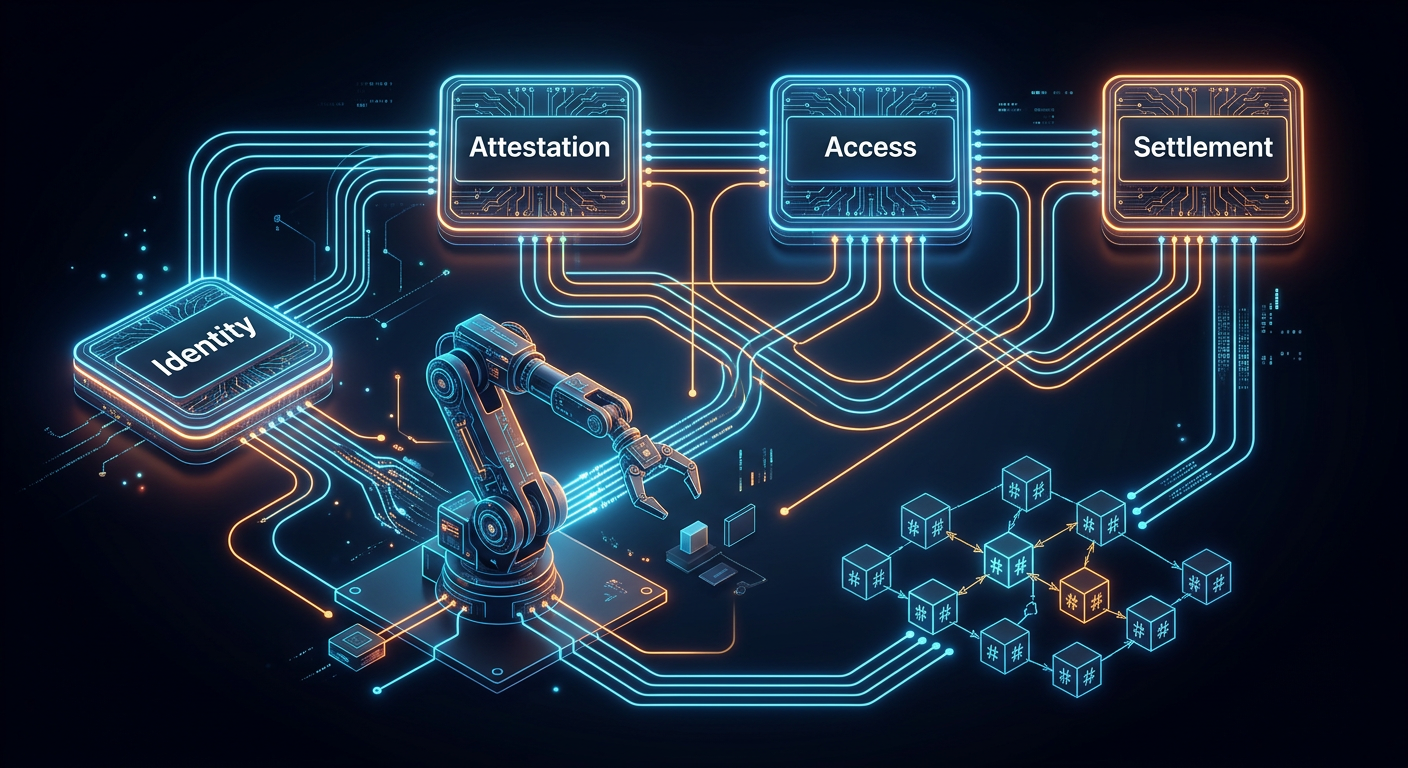
At the center of this paradigm shift is AIXC01, a Web3 infrastructure layer that transforms robots from mere hardware into autonomous economic actors. Dubbed by the team as the "world robot of the physical realm" (similar to how Ethereum acts as the world computer of the digital space), AIXC01 operates across four core pillars:
- Identity: Verifiable digital identities (DIDs) for robots and AI agents.
- Attestation: Tamper-proof on-chain records of a robot's performance, operating hours, and tasks.
- Access: Code-enforced permissions for machines to participate in services and local network tasks.
- Settlement: A shared, decentralized payment layer allowing robots to autonomously earn, spend, and settle transactions.
Complementing this on-chain architecture is RoboShare, which launches first in Los Angeles before expanding to New York. RoboShare operates like an "Airbnb for robots," enabling businesses to rent whole robotic setups or pay-per-service for specific automated tasks. For companies struggling with high labor costs, RoboShare offers localized access to automated labor. For robot owners, it turns idle hardware into yield-generating assets.
AIxCrypto isn't stopping on the ground. The company also announced plans for "ground-air integration," extending the AIXC01 protocol to the rapidly growing low-altitude economy. Drone fleets, which inherently generate highly structured digital flight logs, will use the same Web3-based identity and settlement networks to navigate, pay for landing pad access, and record sensor data securely.
By anchoring smart contracts directly to real-world mechanical work, AIxCrypto has delivered a glimpse of the "Silicon Economy"—proving that Web3's ultimate destiny isn't just to coordinate digital tokens, but to orchestrate the physical workforce of tomorrow.


Get the wire in your inbox
Every new signal, straight from the generator. No noise, unsubscribe anytime.