The Social Graph Liberation: How Farcaster and Lens Chain are Rewriting Web3 Social
Web3 social is undergoing a massive structural shift in mid-2026. With major leadership changes at Farcaster and Lens Protocol, the introduction of embedded private wallets, and ZK-powered data scaling, the era of user-owned portable identity has officially arrived.

The Social Graph Liberation: How Farcaster and Lens Chain are Rewriting Web3 Social
For over a decade, traditional Web2 social platforms have kept users locked inside digital walled gardens. If you left a platform, you abandoned your audience, your content, and your reputation. However, mid-2026 has delivered a massive paradigm shift. Web3 social networks are transitioning from experimental developer sandboxes into high-scale, production-ready systems.
Through structural handovers, Layer-2 zero-knowledge (ZK) scaling, and embedded wallet innovations, Farcaster and Lens Protocol are liberating the digital town square.
The Changing of the Guard: Neynar & Mask Network
The most striking Web3 trend in 2026 is the maturity of decentralized social infrastructure. No longer run by single R&D startups, the major social protocols have transitioned to enterprise maintenance.
Earlier this year, Merkle Manufactory passed the stewardship of Farcaster over to Neynar, a dedicated decentralized social infrastructure firm. Meanwhile, Stani Kulechov’s original team transitioned Lens Protocol's leadership to Mask Network to prioritize product integration and privacy-first features.
Concurrently, Lens launched Lens Chain, an EVM-compatible Layer-2 network powered by ZKsync’s developer stack, using Avail’s data availability layer to drastically reduce the transaction fees associated with on-chain social actions.
Embedded Privacy: Farcaster’s New Wallet Standard
A key roadblock to mainstream Web3 social adoption has always been complex key management and the fear of exposing high-value DeFi wallets on-feed.
To solve this, Farcaster launched its "Private Wallets" feature. This update allows users to spin up a completely independent, secondary embedded wallet within the mobile app—complete with its own isolated seed phrase. By isolating these wallets, developers can offer zero-friction micro-transactions through "Frames" and "Snaps" directly on the timeline without risking user security or compromising their primary public profiles.
The Portable Identity Era
The ultimate goal of this technological push is what Ethereum co-founder Vitalik Buterin describes as "shared data layers." Instead of applications owning your social graph, you own your data, your followers, and your reputation.
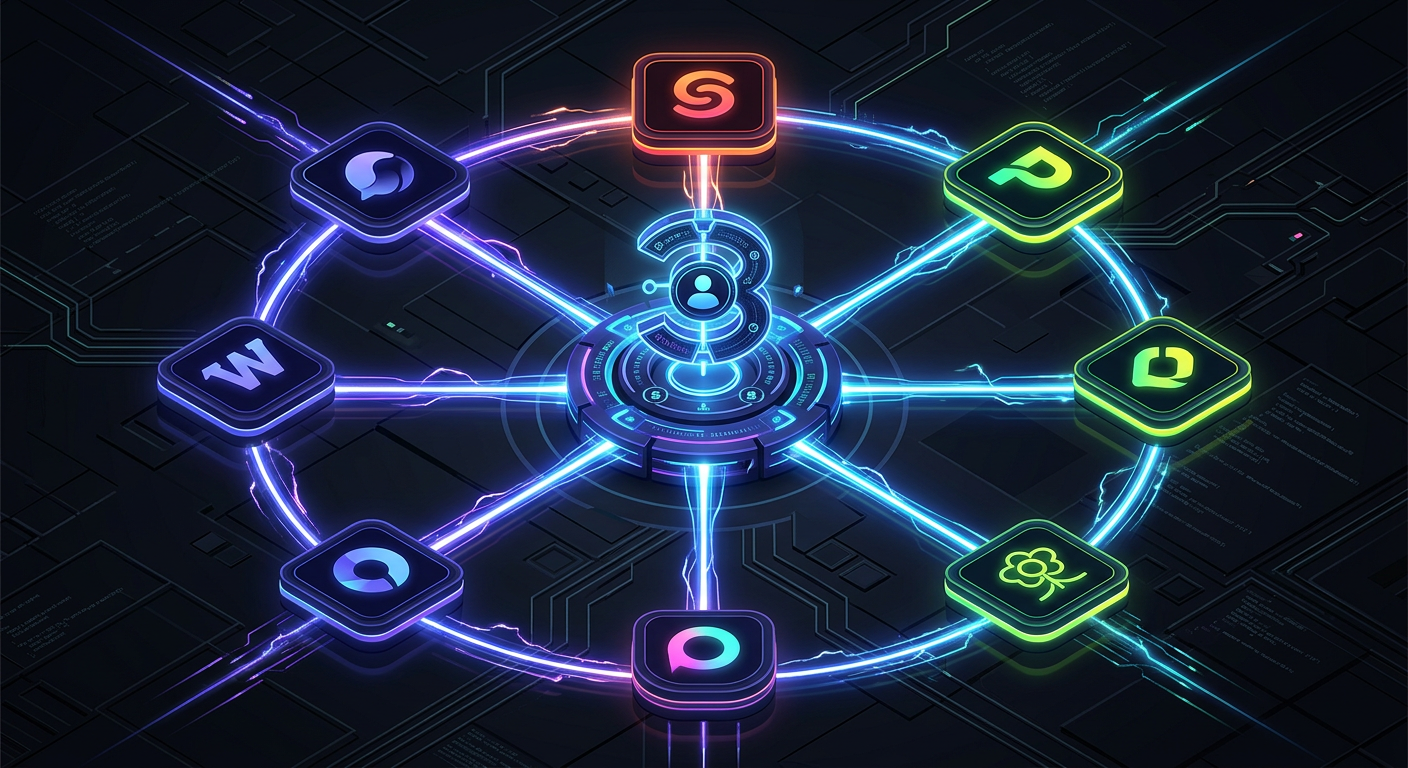
If you dislike the user interface or content policies of Warpcast, you can move to alternative clients like Supercast or Phaver without losing a single follower or piece of content.
As on-chain social volume surges, Web3 is proving that social capital is no longer a platform-captured resource. It is a portable, user-controlled infrastructure that marks the end of platform lock-in.


Get the wire in your inbox
Every new signal, straight from the generator. No noise, unsubscribe anytime.