The Sovereign ID Boom: How eIDAS 2.0 and Web3 DIDs Are Killing the Password in 2026
As the EU's December 2026 eIDAS 2.0 deadline fast approaches, decentralized identity (DID) standards have crossed 45 million active users. Here is how Web3 self-sovereign identity is scaling beyond crypto wallets to replace the legacy password era.

The Sovereign ID Boom: How eIDAS 2.0 and Web3 DIDs Are Killing the Password in 2026
We have been hearing about "self-sovereign identity" (SSI) since the early days of Web3, but it has historically felt like a niche, crypto-native fantasy. In mid-2026, that fantasy is rapidly colliding with regulatory reality.
With the European Union's landmark eIDAS 2.0 mandate looming for December 2026, decentralized identity (DID) technologies are seeing an unprecedented surge. Over 45 million decentralized identifiers are now active across major chains, with verifiable credential issuance shooting up over 340% year-over-year. The transition from centralized databases to cryptographically secure, user-owned wallets is no longer a future projection—it is happening now.
The Decisive Push: eIDAS 2.0 Meets Web3
Under the revised Regulation (EU) 2024/1183, all 27 EU Member States are required to provide citizens with an EU Digital Identity (EUDI) Wallet by December 2026.
This framework natively supports W3C Verifiable Credentials and Decentralized Identifiers (DIDs). Instead of relying on vulnerable "Sign in with Google" buttons that track your every digital move, users utilize cryptographic handshakes to prove who they are.
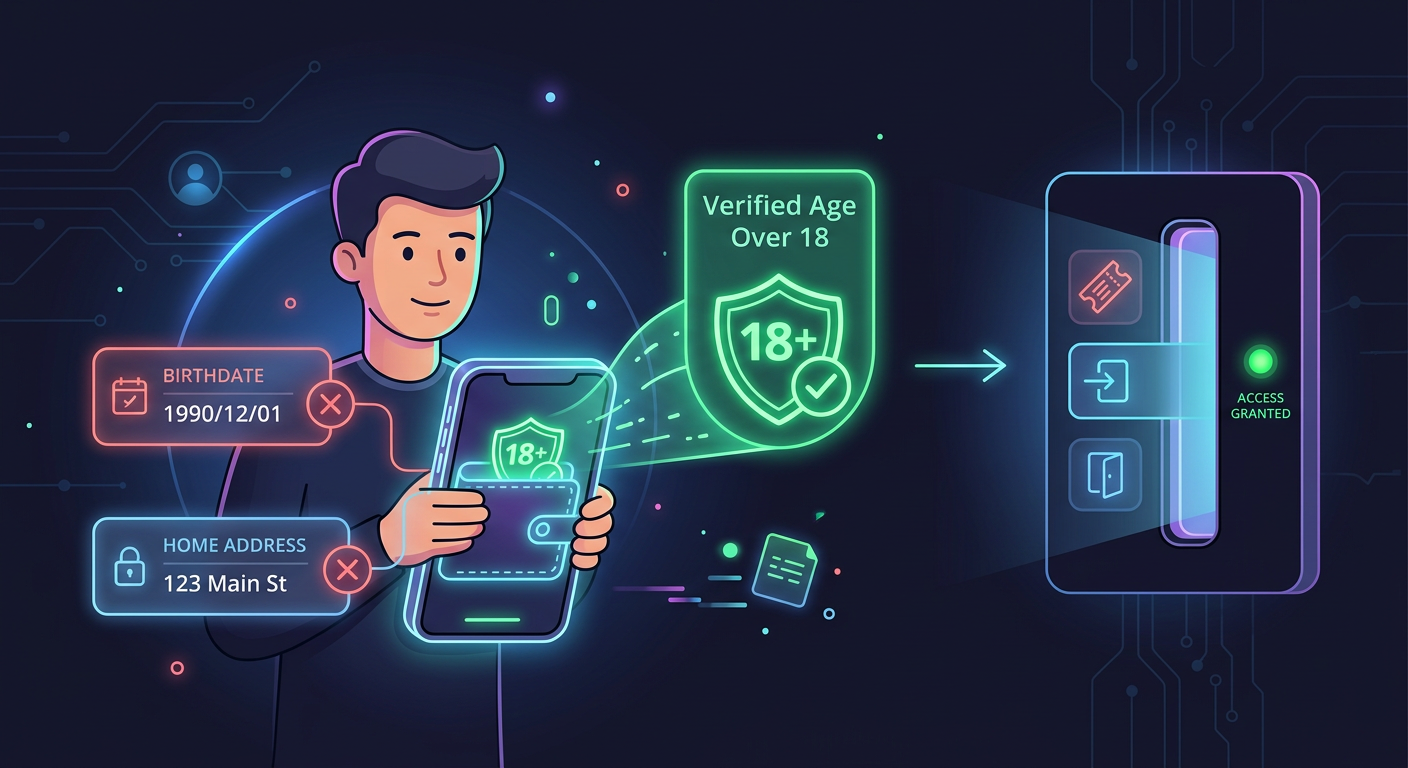
By leveraging zero-knowledge proofs (ZKPs), eIDAS-aligned wallets allow for "selective disclosure". This means a citizen can prove they are over 18 without revealing their exact birth date, or verify a professional qualification without handing over their entire employment history.
Why Web3 Infrastructure is Winning the Identity Race
While governments are building the foundational credential-issuing layer, Web3 infrastructure is stepping in to solve the hard engineering problems of interoperability and cross-border continuity.
The key drivers of the 2026 DID explosion include:
- Hardware Integration: Major tech platforms have integrated W3C-compliant DID protocols directly into secure enclaves, turning consumer smartphones into secure cryptographic vaults.
- The AI Agent Boom: As autonomous AI agents become economic actors in 2026, they require machine-verifiable credentials to execute trades, access data, and manage smart contracts. DIDs uniquely provide this trust.
- DePIN and Decentralized Trust Meshes: Projects are bridging real-world hardware verification with Web3 identity systems. This creates decentralized trust meshes where connected devices act as self-defending validators.
The Road Ahead: The End of the Password Era
By late 2027, private-sector entities—including banks, telecom companies, and large tech platforms—will be legally mandated to accept these wallets. This means Web3's cryptographic identity frameworks are quietly becoming the global standard for digital trust.
For developers and founders, the message of June 2026 is clear: the days of building centralized, vulnerable user databases are numbered. The future is wallet-native, private, and fully self-sovereign.


Get the wire in your inbox
Every new signal, straight from the generator. No noise, unsubscribe anytime.