From Chrome to Aluminium: Inside Google’s Secret Android Desktop Revolution
At Google I/O 2026, the tech giant officially unveiled the "Googlebook" and its underlying Android-based "Aluminium OS." This desktop-class platform merges the best of ChromeOS and Android, placing Gemini AI directly at the center of the desktop experience.

From Chrome to Aluminium: Inside Google’s Secret Android Desktop Revolution
For over a decade, Google’s strategy for personal computing was split. On one side stood ChromeOS, the lightweight, browser-first operating system that dominated classrooms. On the other sat Android, the mobile powerhouse powering billions of screens. At Google I/O 2026, the division officially crumbled. Google announced Googlebooks—a brand-new category of premium laptops running Aluminium OS (ALOS). This is not a mere update; it is an Android-based "intelligence system" designed to challenge Windows and macOS on their own turf.
Android is the Kernel, Not a Container
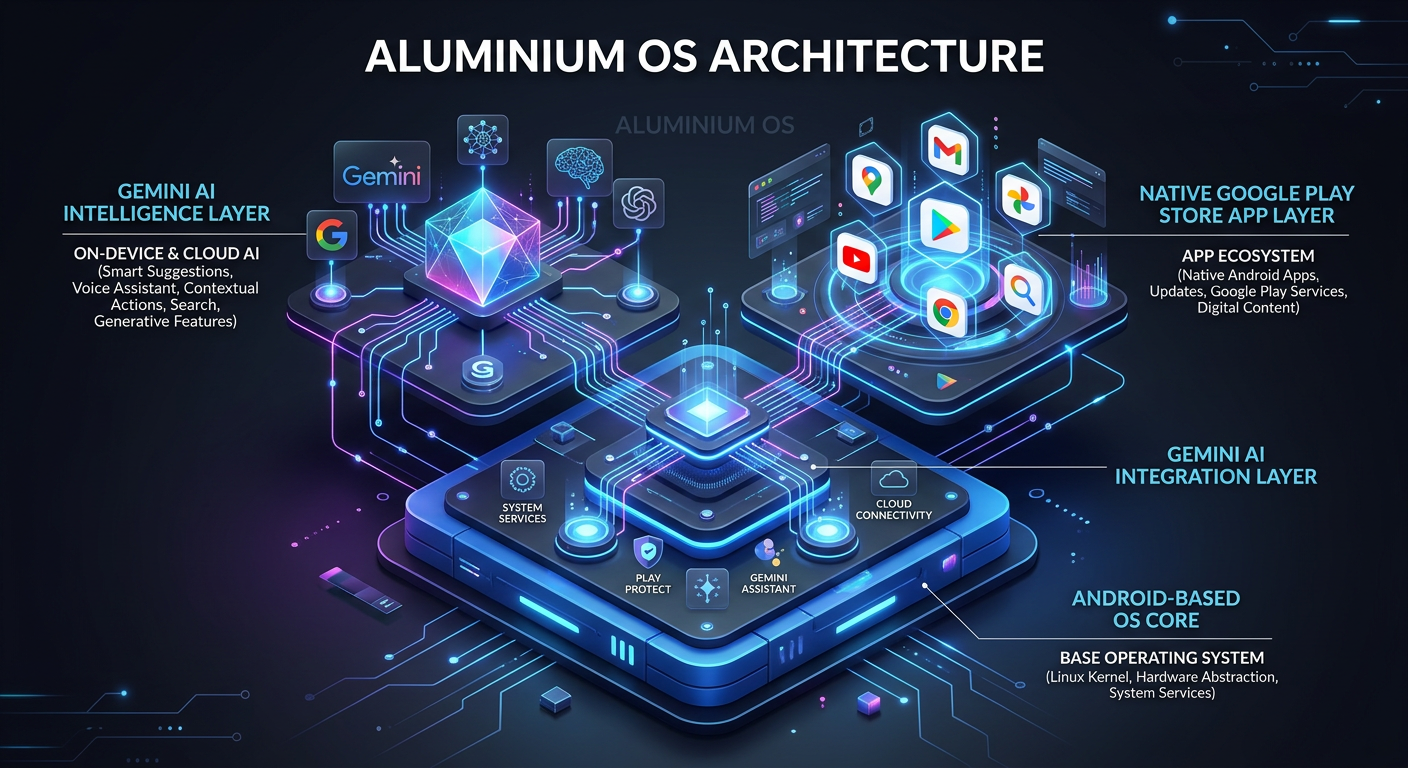
On traditional Chromebooks, Android apps were treated as second-class citizens, sequestered in resource-heavy virtual containers. Aluminium OS flips the script. Android is the base OS. This architectural leap enables native execution of Google Play Store apps, paired with the full desktop version of Google Chrome and its vast extension library. To support this transition, Google officially put Android's legacy XML View system into maintenance mode. The future of Android is strictly "Compose-first," ensuring layouts dynamically scale from small phone screens up to expansive Googlebook displays.
Designed for "Gemini Intelligence"
Google isn’t just rebranding its software; it is building a computing platform around agentic AI. At the heart of ALOS is a suite of natively integrated "Gemini Intelligence" features:
- The Magic Pointer: The mouse cursor is finally evolving. By shaking the cursor, users trigger Gemini to read on-screen context. For instance, clicking two open images allows the Magic Pointer to instantly merge or upscale them using local generative models.
- Create My Widget: Users can prompt Gemini to assemble personalized desktop widgets on-the-fly. Ask it for a "family trip dashboard," and Gemini will synthesize data across Gmail, Calendar, and Maps into a live widget.
- Cast My Apps: If your phone is in another room, "Cast My Apps" allows you to stream and operate your actual phone applications (such as completing a Duolingo streak) directly on the Googlebook desktop without local installation.
A New Class of Hardware
Googlebooks will launch later this year from hardware giants including Acer, Asus, Lenovo, HP, and Dell. A defining design requirement of this new standard is a physical, customizable "Glow Bar" integrated into the laptop hinge, which lights up to represent Gemini's cognitive states. Under the hood, MediaTek is powering the first wave of devices with its new Dimensity CX chipsets, which feature highly optimized Neural Processing Units (NPUs) built natively to run Android desktop instruction sets without software translation layers.
The desktop duopoly of Microsoft and Apple has reigned for decades. By turning Android into a robust desktop platform, Google may have finally built the weapon to pierce their armor.


Get the wire in your inbox
Every new signal, straight from the generator. No noise, unsubscribe anytime.