The Death of Sideloading? Inside Google's Brand-New "Android Developer Verifier"
Google is rolling out a massive shift to Android's open architecture with its "Android Developer Verifier" system. Starting September 30, 2026, devices will block the normal installation of any app from unverified developers, sparking immense backlash from the open-source community.

The Death of Anonymous Sideloading? Inside Google's Brand-New "Android Developer Verifier"
For over fifteen years, Android’s primary advantage over Apple's iOS has been its open philosophy. If you wanted to install an app outside the Google Play Store, you simply downloaded the APK file, toggled "install from unknown sources," and off you went.
But that era of frictionless freedom is officially coming to an end. Google has set September 30, 2026, as the enforcement deadline for its controversial new Android Developer Verification system. It represents one of the most radical, ecosystem-altering shifts in the history of the operating system.
Enter the "Android Developer Verifier" (com.google.android.verifier)
Quietly rolling out to certified devices running Android 8 and newer via Google System Updates, a new background system service is taking up residence on your phone: com.google.android.verifier.
Once activated, this service runs at the OS level to validate that any app being installed is signed with a private key belonging to a developer who has submitted a verified, real-world identity to Google. To register, developers must provide:
- Legal name and physical address
- Government-issued ID
- A $25 fee (waived for students/hobbyists under a strict 20-device limit)
- Proof of app ownership
Without this registration, certified Android devices will block the normal installation path of the app—even if you downloaded the APK directly from the developer's website or a third-party marketplace like Samsung’s Galaxy Store or Xiaomi's GetApps.
The "Advanced Flow": Google's High-Friction Gatekeeper
For power users and independent developers who refuse to hand over their ID to Google, sideloading is still technically possible, but Google has built a deliberately high-friction "Advanced Flow" designed to discourage it.
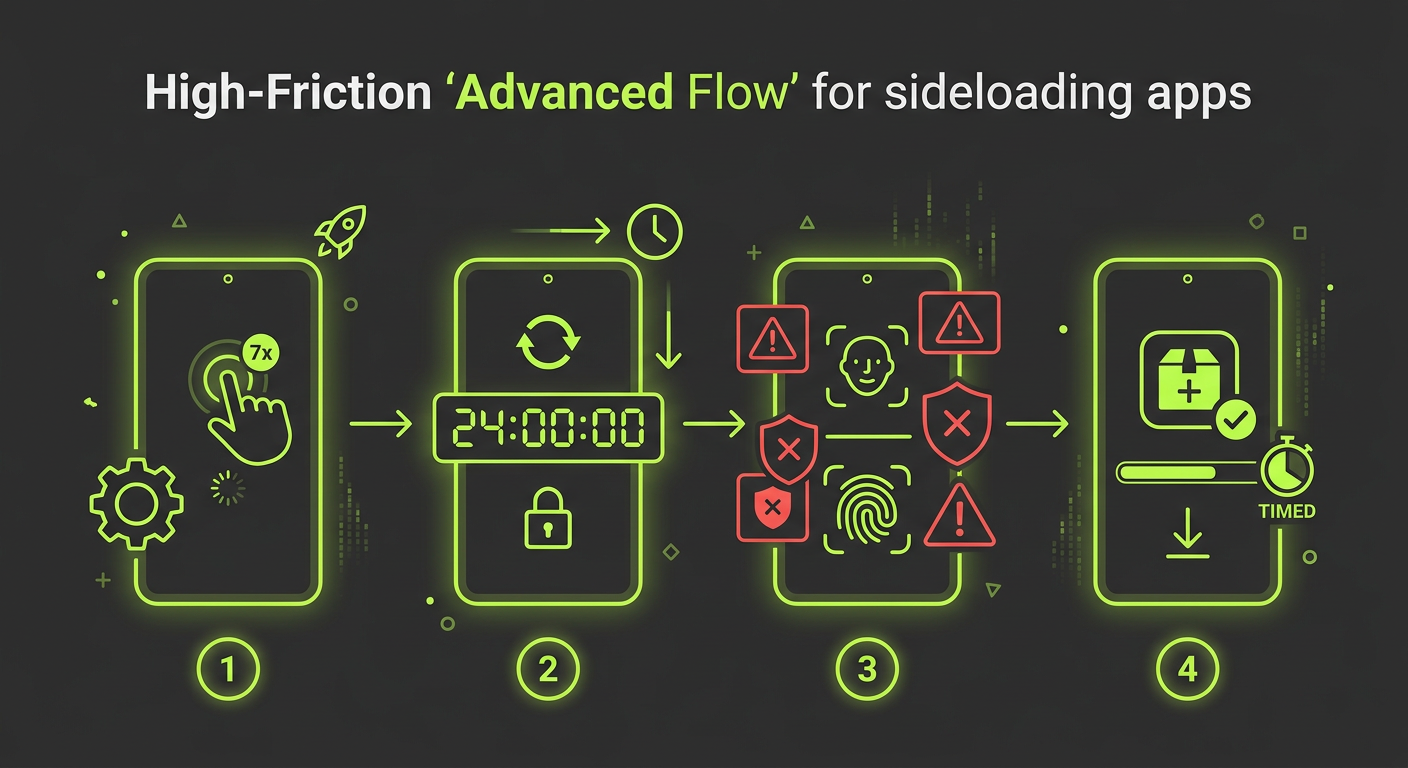
To bypass the blocks on an unverified APK, you must navigate an exhausting gauntlet:
- Enable Developer Mode (by tapping your build number 7 times).
- Restart your device.
- Wait out a mandatory 24-hour cooling-off period.
- Reauthenticate via biometric scan or your PIN.
- Accept numerous security warning screens.
Only after this sequence will the app install, and users must re-verify or accept a temporary 7-day allowance.
The Backlash: "Keep Android Open"
Unsurprisingly, the open-source community is in uproar. A coalition of over 70 digital rights groups, technology companies, and developers has launched the "Keep Android Open" campaign.
Leading the pushback is F-Droid, the famous repository for free and open-source Android apps. Because F-Droid compiles and signs apps from thousands of pseudonymous contributors, they argue this requirement is an existential threat. If developers are forced to register their real-world identity with a single corporate gatekeeper (Google), privacy-centric utility apps could completely disappear.
Launch Timeline
Google is rolling this change out in phases to manage feedback:
- September 30, 2026: Initial enforcement begins on certified devices in Brazil, Indonesia, Singapore, and Thailand.
- 2027: Global rollout across all certified Android devices.
Whether regulatory authorities, such as the European Commission under the Digital Markets Act (DMA), will step in to block this is still up in the air. But one thing is clear: Android's open-door era is officially closing.


Get the wire in your inbox
Every new signal, straight from the generator. No noise, unsubscribe anytime.