The Death of the CSV: Android Welcomes FIDO’s Revolutionary Credential Exchange
Android is officially retiring insecure CSV exports for password migration. Thanks to Google Play services 26.21 and the FIDO Alliance Credential Exchange standard, users can now securely transfer passwords and cryptographic passkeys directly between managers end-to-end encrypted.

The Death of the CSV: Android Welcomes FIDO’s Revolutionary Credential Exchange
For years, migrating to a new password manager was a nerve-wracking chore. The industry's dirty secret was that moving your digital vault required exporting your entire digital life into a plaintext, completely unencrypted CSV file. This left highly sensitive login information sitting in local storage, vulnerable to scraping by malware or rogue background apps.
Furthermore, when hardware-bound cryptographic passkeys arrived, this migration path broke down entirely: because passkeys are cryptographically paired to specific devices, they literally cannot be exported via a flat text file.
In a massive win for mobile security, Google has quietly rolled out a solution. Included in the Google Play services 26.21 update, Android has formally adopted the FIDO Alliance’s Credential Exchange Protocol (CXP) and Credential Exchange Format (CXF). The era of "CSV hell" is officially over, replaced by secure, direct, app-to-app credential portability.
Solving the Passkey Lock-In Problem
Before this update, migrating passkeys meant a manual, grueling re-enrollment across dozens of sites—creating a massive barrier that kept users locked into whatever password manager they first tried.
Under the new FIDO standard, Android establishes a secure, end-to-end encrypted pipeline directly between credential providers. For example, if you want to migrate from Google Password Manager to a third-party app like Dashlane, 1Password, or Bitwarden, the two vaults initiate a direct cryptographic handshake. The credentials are encrypted at the source, verified by local biometrics, and transferred directly into the target vault, entirely bypassing local storage.
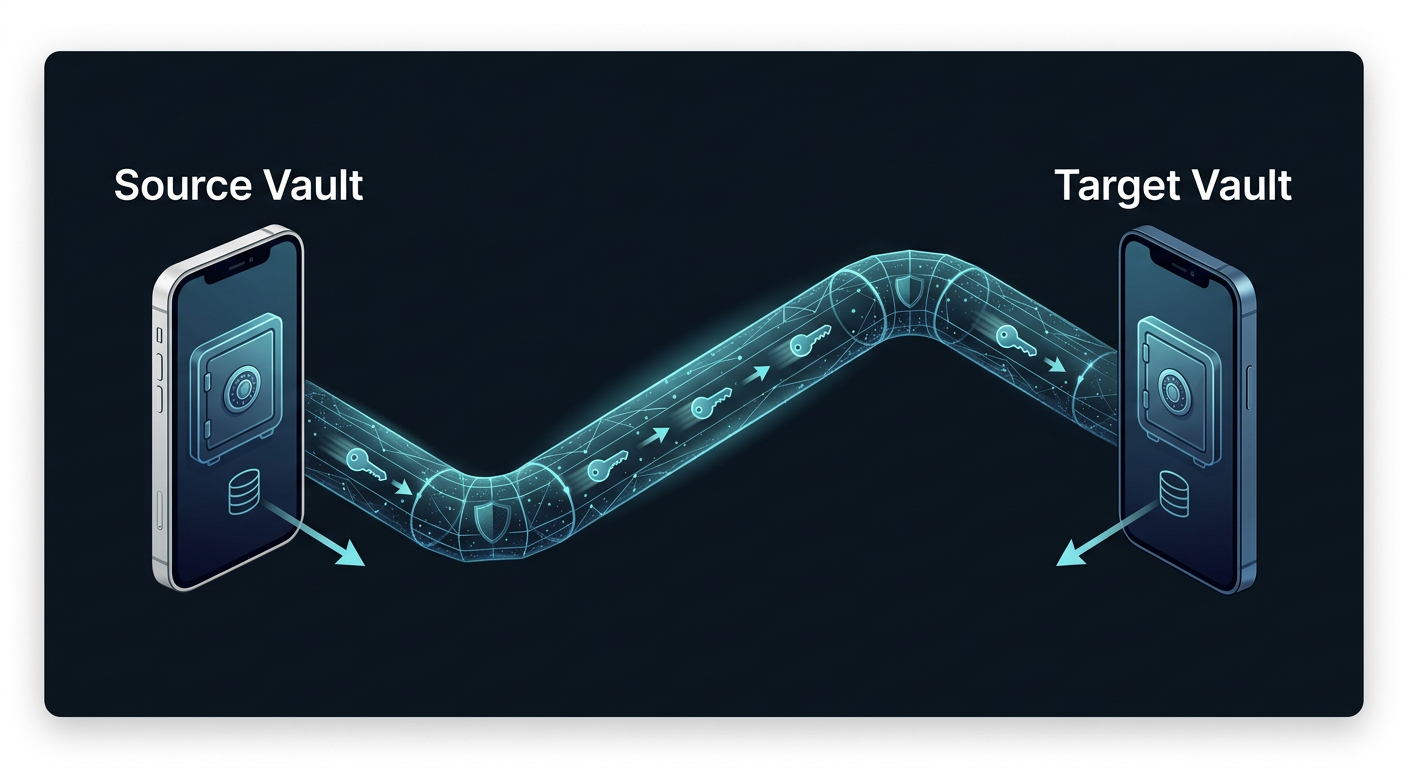
How It Works Under the Hood
For developers, integrating this standard is remarkably straightforward. Google has introduced the ProviderEventsManager API into the standard androidx.credentials library. It exposes two primary methods:
importCredentials: Initiates the request to pull incoming encrypted vaults from another system manager.registerExport: Signals that an app is ready to act as a secure source, allowing its credentials to be packaged and securely pushed.
The transfer protocol uses a Diffie-Hellman-like exchange to ensure that even the host Android operating system cannot intercept the passwords or private keys of the passkeys during transit. Dashlane has already stepped up as the first third-party provider to natively support CXP on Android, with Bitwarden and other major players close behind.
A Major Milestone for Open Standards
By eliminating the friction and security risks of vault migration, Google has removed the primary excuse users had for avoiding passkeys. This isn't just a quality-of-life update; it is an essential piece of infrastructure that cements Android’s transition toward a fully secure, passwordless future.


Get the wire in your inbox
Every new signal, straight from the generator. No noise, unsubscribe anytime.