The Gemini Intelligence RAM Barrier: Why Your $1,500 Galaxy S25 is Already Obsolete
Google's highly anticipated Gemini Intelligence is bringing groundbreaking agentic AI features to Android. However, strict hardware requirements—including a 12GB RAM floor and mandatory Gemini Nano v3 support—have left recent flagships like the Galaxy S25 and Pixel 9 out in the cold.

The Gemini Intelligence RAM Barrier: Why Your $1,500 Galaxy S25 is Already Obsolete
When Google officially released Android 17, it promised more than just a typical OS update. The headline development is Gemini Intelligence, a deeply integrated, agentic AI layer designed to turn your phone from a passive tool into a proactive partner. With features like multi-step app automation, custom on-the-fly widget generation, and Chrome’s new "Auto Browse" capable of booking reservations on your behalf, it represents the most significant mobile paradigm shift in years.
But there’s a massive catch.
A quiet footnote on Google’s official developer documentation has sparked widespread outrage across the Android community. Google has established incredibly strict minimum hardware requirements for Gemini Intelligence. The result? Millions of premium, expensive flagship devices purchased just a year ago are already being left behind.
The "Bouncer" at the Gate: The Strict Spec Requirements
To run Gemini Intelligence locally and securely via Android's AICore, your device has to pass a hardware checklist that reads like a bouncer at an exclusive club.
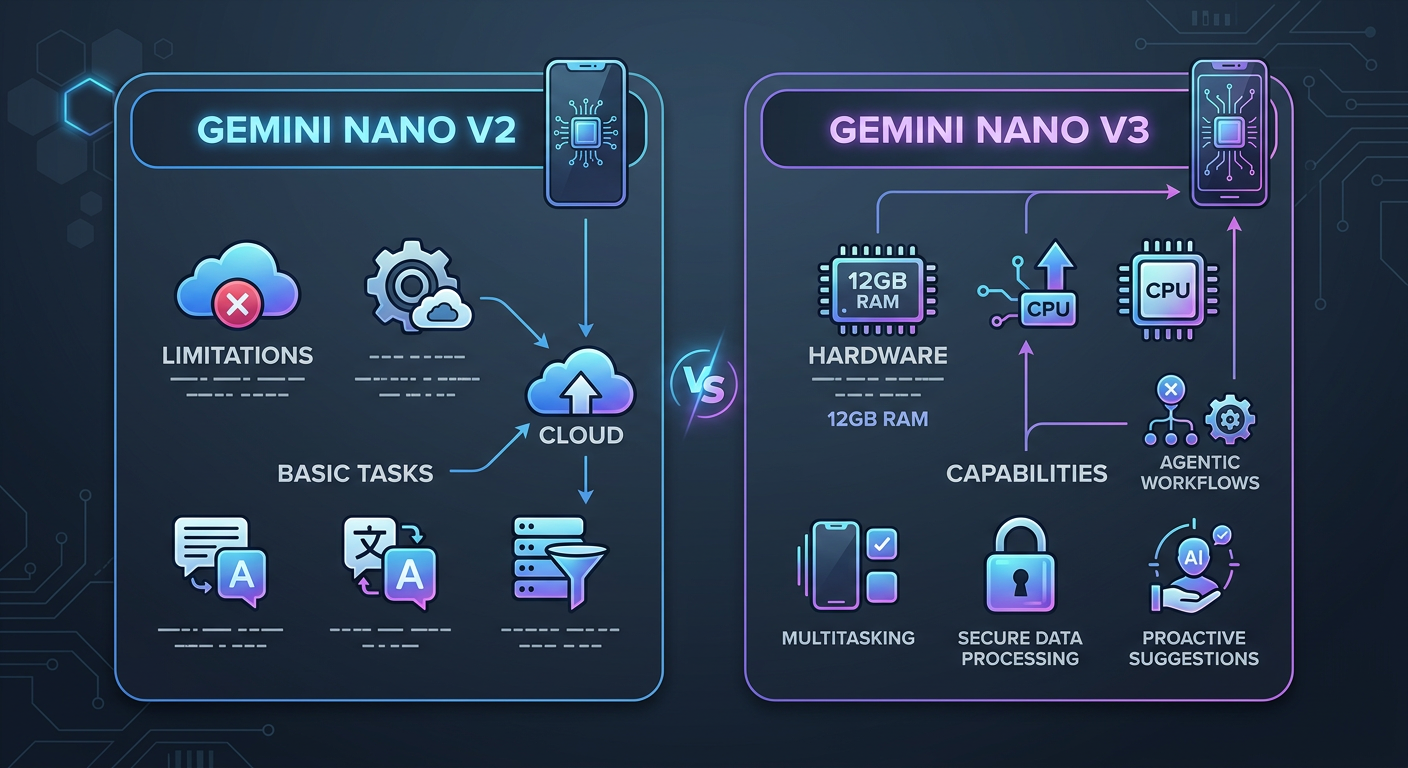
According to Google, a qualifying device must have:
- A flagship-tier chipset.
- A minimum of 12GB of RAM (notably higher than the 8GB required by Apple Intelligence).
- Native integration of the brand-new Gemini Nano v3 model.
- At least five years of OS upgrades and six years of quarterly security patches.
- Passed strict "Quality in Field" service-level agreements, specifically target-limiting system crash rates.
The Burn List: Who's Out?
The absolute dealbreaker for most existing devices is the Gemini Nano v3 requirement. Google's documentation reveals that Nano v3 is strictly reserved for the newest generation of hardware.
This means that premium, ultra-expensive handsets launched recently are officially locked out of Gemini Intelligence. The list of excluded devices includes:
- The entire Google Pixel 9 series (which run on Nano v2).
- The Samsung Galaxy S25 series (including the Ultra).
- The Samsung Galaxy Z Fold 7 and Z Flip 7.
- The OnePlus 13 and early 2025 flagships from Xiaomi.
Only 2026-era premium devices—such as the Samsung Galaxy S26 series, the Pixel 10 series, the upcoming Galaxy Z Fold 8, and the OnePlus 15—are currently certified to handle the heavier compute workloads of Nano v3.
A Fragmented AI Future
While on-device AI requires substantial horsepower, shutting out consumers who spent upwards of $1,500 on flagships less than a year ago is a tough pill to swallow. Critics argue that Google's aggressive push to build a local, agentic AI operating layer has come at the cost of Android's signature flexibility, threatening to alienate its most loyal power users.
If you want to experience the true future of an agentic Android OS, it looks like your only choice is to prepare for an expensive upgrade.


Get the wire in your inbox
Every new signal, straight from the generator. No noise, unsubscribe anytime.